| ஒத்திசைவு | प्रत्याह्वय | resonance | for nuclear power, gmo, space research, vaccines, s&t+++, the works… | supporter of the use of our brains-consciousness & the indefatigable human spirit | मेरा देश बदल रहा है | (λஸம்ஸ்க்ருதம்.λதமிழ்.λஹிந்தி.λஆங்கிலம்… …λகடந்தகாலம்.λஓளிரும்நிகழ்காலம்.λஜொலிக்கப்போகும்எதிர்காலம்.λகற்பனை.ஒத்திசைவு) சிந்தனை | 🕉️ नमस्ते सदा वत्सले मातृभूमे… 🇮🇳 | “… … இந்தத் தாளம்தான் செய்கைகளில், அசைவுகளில், காரியங்களில் ஒரு ஒத்திசைவை, லயத்தைக் கேட்டு நிற்கிறது…” |
I am well aware of the sad but real & living idea of Bullshit Asymmetry Principle, also known as Brandolini’s Law; this is about the effort & the energy needed to refute misinformation/fakenews is an order of magnitude (at least 10 times) larger than the energy required to create it.
(…for example, may be the over-enthusiastic gent Sri S Krishnan (TSK henceforth) took some half-an-hour to do ‘research’ and ‘format’ his erroneous & egregious X-post presented in the next section, with some 100+ reposts and likes – but I am aware of my readership numbers (a steady 7½) and also the effort needed for this specific rebuttal.
Though I have possessed the basic context-specific data for more than 15 years—which is why I laughed out loud when I first read TSK’s assertion in this round—to distill everything, ensuring that I miss no fact or angle, marshal all the resources, and present a cogent argument, I have already spent about two hours, and it may take another 6–8 hours** to write this post…)
…see the asymmetry? Bullshit is easy-peasy! But to methodically and clinically take it apart – AND communicate it in a clear, scholarly language is oh so difficult!
…and then, there is this question of ‘in which language I am going to write.’ I chose English as a medium, as it is by default, has more scholarly possibilities and also better readership than 4 or so regular readers of the occasional columns/posts here at Othisaivu. So, here’s hoping some 10 readers would read this labour of jobless-love.
But. Why rebut at all? Why can’t I ignore this as some pure Noise from someone (TSK here) who admittedly has valiantly fought with Dravidoids and Tamil Supremacists rather frequently? One reason is that, in Tamil pop or even ‘serious’ tech/historical discussions – very rarely do we encounter really scholarly and evidence based takes – and I personally want to set an example of how it can be done.
(of course, I am merely a serious student of histories among many other interests, so correctives are welcome – and suggestions to improve the takes in the post would be acknowledged with thanks, though I don’t much care about unreasonable/dravidoid brickbats anyway)
The main reason:
I hold my fellow Bharatiya Conservatives (contrary to rather ‘popular’ myths – far from being all regressive – many of them are briliantly progressive too, in fact many of them are more scholarly, deep, tech-savvy & amenable to reason than their detractors) to MUCH HIGHER standards than what I would do to, say naturally faffing Left-Liberal public intellectuals, with their self-declared progressiveness, erudition and scientific-temper, whatever the fuck they mean by those buzzwords in their own dick-tionaries…
Thanks!
Anyway…
(I have taken the effort to do all these scaffolding & structuring because I want this write-up/rebuttal as a model of what I propose to do henceforth, in such engagements… of course, therefore it is very loooong – some 5000 words – along with a skeletal treatment some adjacent claims/diversions)
2
Though for some historical reasons (actually a similar one: I had the temertity to correct some absolutely ridiculous claims of TSK earlier) I have been blocked by the gent, and occasionally I get sent some pointers by friendly circles – and let me say how I got these of gems of TSK are not too very relevant.
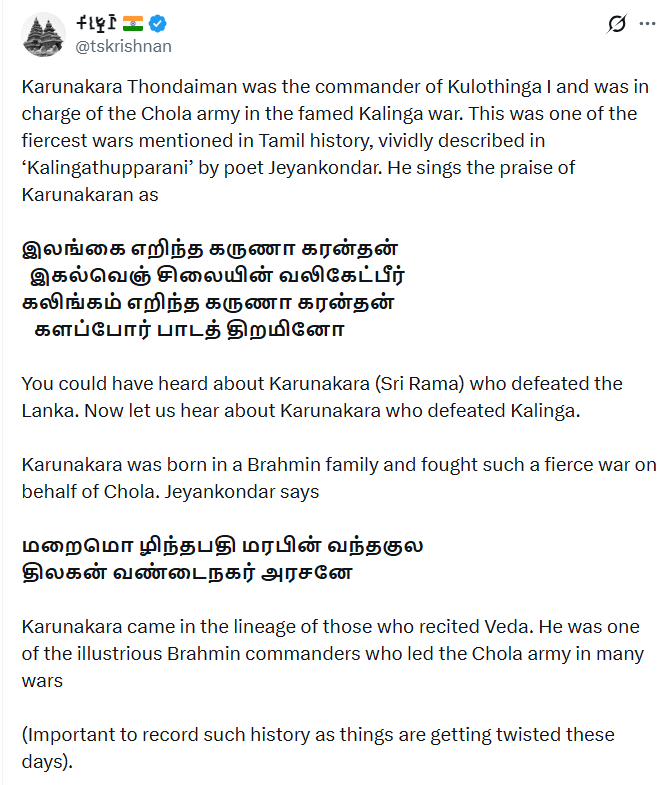
Here is the main claim by TSK:
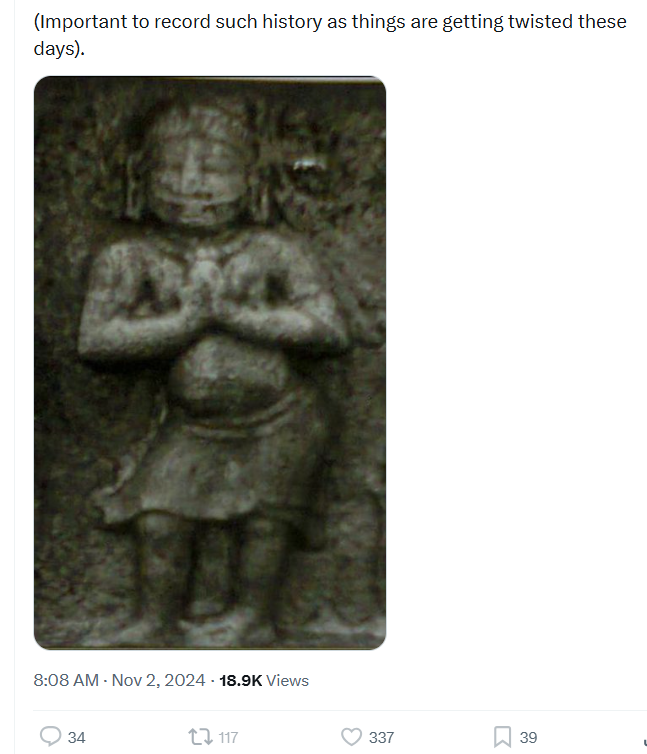
… in which thread, he makes a few random claims – but the the main one is: KT was from a Brahmin lineage.
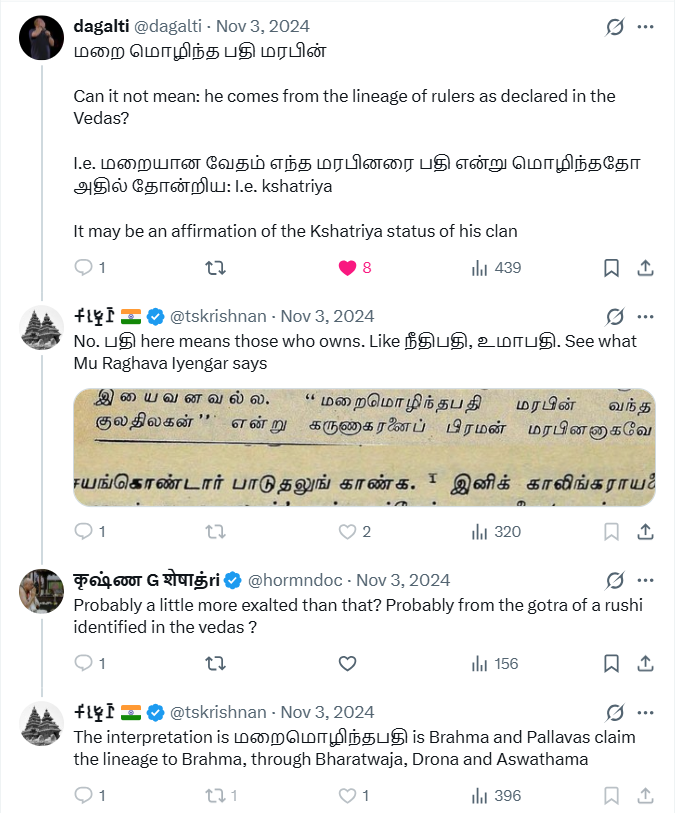
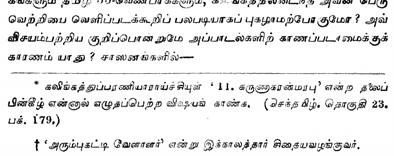
Subsequently when this handle @dagalti asks a relevant question about TSK’s vehement assertion (not that the handle quoted any additional reference), by expanding on and annotating the verses quoted from Kaliṅkattupparaṇi, TSK stonewalls and brings in a fragment of analysis by Sri Mu Raghava Iyengar.
In the big picture of course, I am seriously convinced that these varṇa and jāti classifications are moot/academic points, all are and were Sanatana Dharmics of various extractions – avarnas & savarnas being narrow & divisive classifications – and am responding only to the uncalled-for vehemence of the claim because facts have to be part of any bharatiyata involved discourse. (and um, even otherwise!)
…and then goes on to invent and allude various other interpretations etc etc.
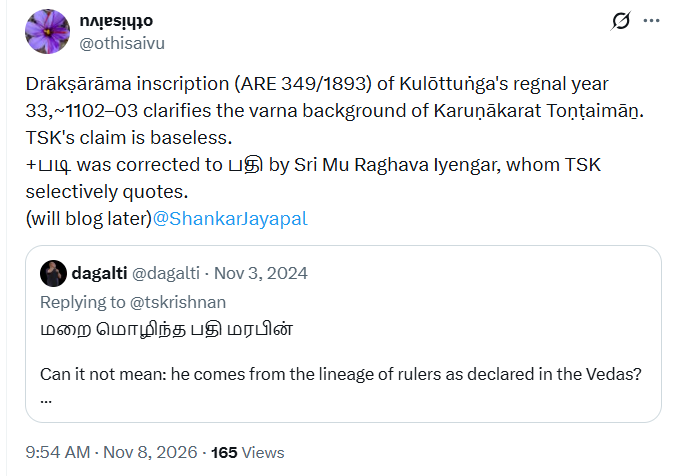
My short response to TSK’s claim:
(…of course, pop-historianships are not at all bad & outlandish per se, and I do agree that TSK has the potential to be a scholarly gent, and he has been a significant anti-Dravidian polemicist & steadfast assembler-presenter of primary-source facts – and perhaps it is because of the latter reasons that he erred on this side… but whatever it is – I hold him to higher standards as explained elsewhere in this esssay….)
Now. Let us analyse the whole context in detail – with solid and verifiable evidence for clarifying & debunking the central claim of TSK.
3
The gist of the assessment in this essay: Karuṇākara Toṇṭaimāṉ was, on the balance of the surviving evidence, not of Brahmin extraction.
The strongest evidence for this is the Drākṣārāma inscription. It describes the commander identified by K. V. Subrahmanya Aiyer as Karunakara, and that commander’s father, as Śūdras. The inscription gives the commander the personal name Tiruvaraṅga and the titles [Vaṇḍu]varāja and Pallavarāja. The conclusion rests on the well-supported identification of that commander with the Karuṇākara named in the Kāñcīpuram inscription and celebrated by Jayamkondar/Jayaṅkoṇṭār.[1]
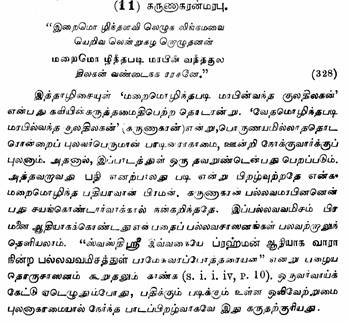
The circulating claim (not only of TSK) starts from a genuine historical fact. Karuṇākara led Kulōttuṅga I’s Kaliṅga expedition. It then turns Jayamkondar’s praise of his lineage into a statement that he came from a family of Veda reciters and was born a Brahmin. Two photographed palm leaves and the early editions examined read படி. The alternative பதி first appears in the evidence examined as Mu. Raghava Iyengar’s conjectural correction. His interpretation invokes Brahmā as an ancestor in a Pallava pedigree. That’s all.
It is to be noted that neither reading says that Karuṇākara was born a Brahmin.[2]
Scope of the rebuttal
The discussion seeks to examine TSK’s military and literary claims, the royal or Kṣatriya interpretation offered in reply to his assertions, and the subsequent ‘appeal to authority’ of TSK to Iyengar and Pallava genealogy.
It seeks to compare the actual wording of the poem/verse with what the sources say about the commander and his father. The figures reproduce source passages beside the analysis, so that there is no doubt. Copious and numbered footnotes identify the original editions, manuscript images and scholarly discussions – so that there is clarity about the sources quoted. Nothing is left to chance or ‘alternative’ interpretation or semantic fig-leaves.
Rest of the essay deals with the following sections:
The Kaliṅga expedition and the Rāma comparison
Grammar of the disputed lineage verse
Early printed editions and their variant notes
Palm leaf witnesses and remaining manuscript checks
Iyengar’s conjecture and the circulated extract
Later scholars and the Pallava pedigree
The Kāñcīpuram and Drākṣārāma inscriptions
The identification of the commander and the campaign chronology
Other military claims and the conclusion
4
The Kaliṅga Expedition and the Rāma Comparison
Jayamkondar, also called Jayaṅkoṇḍār/Jayaṅkoṇṭār, presents Karuṇākara as the lord of Vaṇḍai and an officer of Kulōttuṅga I, the king celebrated under the title Abhaya. Karuṇākara offers to strike the seven Kaliṅgas, receives permission, leads the army and directs it in battle.
The poem also presents him as Abhaya’s principal minister. Verses 341–342, 443, 460 and 471 support his command in this expedition. [3]
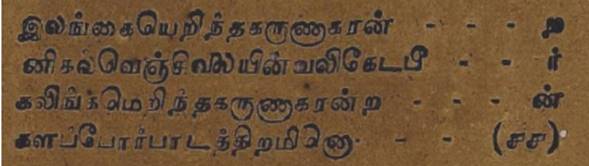
The Laṅkā stanza is II.44, numbered 64 in Project Madurai. It belongs to கடை திறப்பு, the section that calls on women to open their doors. The first Karuṇākara is Rāma, whose fierce bow struck Laṅkā. The second is the commander who struck Kaliṅga. The shared name allows Jayaṅkoṇṭār to set the two victories beside each other. வலிகேட்பீர் invokes hearing of the bow’s might and திறமினோ asks the addressees to open the doors so the battle can be sung.
Of course, TSK’s claim gets the comparison right and loses those two details – not that they are central to his other claim. True, the Laṅkā action in this stanza belongs to Rāma.[4]
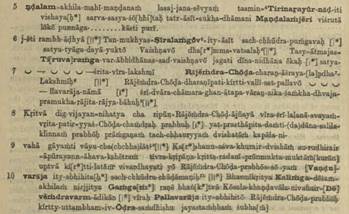
Figure 1. Subbaraya’s Puduvai edition, II.44, printed p. 15. The older print has இகல்வெஞ்சிலையின், the reading quoted in the exchange.[5]
Gopala Aiyar quotes இகல்வெஞ் சிலையின் in his 1925 reply and defends his edition’s கடைதிறமின் on metrical grounds. Iyengar’s rejoinder and Subbu Reddiar give இசைவெஞ். Iyer takes the women as listeners. Iyengar reads an invitation to sing together. They also debate the stanza’s placement. Kanakasabhai Pillai explicitly identifies the Laṅkā figure with Rāma in 1890, and Mu. Arunachalam reaches the same reading.[6]
The account of warfare is exceptionally vivid. Its courtly paraṇi form includes epic comparisons, hyperbole (naturally!) and a supernatural feast on the battlefield. Those features support a claim about how the victory was commemorated. The description gives no comparative measure by which to rank the war among the fiercest in Tamil history.[7]
The published exchanges between Aiyar and Iyengar concern the Rāma stanza and other textual problems. They add no named witness for பதி at XI.30.[8] No, not at all.
5
Grammar of the Disputed Lineage Verse
The lineage passage is XI.30, in காளிக்குக் கூளி கூறியது. It is verse 328 in Gopala Aiyar and Iyengar and 341 in several later editions. The king has just ordered an attack. The chief/commander salutes him, promises to strike the seven Kaliṅgas and is described as the ruler of Vaṇḍai and the குலதிலகன், the ornament of his lineage.[9]
The reading படி
In மறை மொழிந்தபடி, the Veda speaks. படி makes the phrase mean “as the Veda declares” or “in accordance with what the Veda says.” The same poem uses மாமுனி மொழிந்த படியே at v. 185 for what the great sage said. With மரபின் வந்த, the disputed line presents Karuṇākara as the ornament of a lineage sanctioned or described in Vedic terms.
Palanivel Pillai glosses மறை as Veda and குலதிலகன் as a person eminent in his lineage.
Kausalya Hart renders the lineage praise in terms of the śāstras.[10]
Figure 2. Kanakasabhai Pillai’s 1890 translation of XI.30 interprets the lineage as royal and sanctioned by the Vedas.[11]
The proposed reading பதி
On Iyengar’s construction, மறை is what was uttered, மொழிந்த is the relative participle and பதி is the singular lord it qualifies. He identifies that lord with Brahmā. The clause then describes a lineage descending from the Veda-uttering lord.
Contrary to what TSK claims in the subsequent, rather flippant remarks – நீதிபதி and உமாபதி illustrate meanings of pati such as lord, master or husband. They cannot determine the reading of this line.
More importantly – the poem itself uses பதி for the ruler of North Kaliṅga at XI.27, which confirms that the sense “ruler” was available.[12]
The counterproposal that the Veda declared certain people to be rulers – resembles Kanakasabhai’s royal-lineage interpretation when read with படி. With பதி, it supplies an unexpressed predicate such as பதி என்று and an object such as the people so designated.
வண்டைநகர் அரசன் expressly gives Karuṇākara a ruling title. The verse gives no explicit Kṣatriya classification. (and, this goes against the doubt expressed by @dagalti)
The original claim about a family of Veda reciters is unsupported under either construction. The poem even has Kulōttuṅga learn the four Vedas from specialists at vv. 242–243, so Vedic learning alone would be an inadequate caste test.[13]
Jayamkondar’s பல்லவர் தோன்றல் at v. 534 associates Karuṇākara with the Pallavas and makes the allusion intelligible if one adopts Iyengar’s reconstruction. The poem also gives Kulōttuṅga a pedigree that runs through Viṣṇu and Brahmā at vv. 184–187.
Such royal genealogies express dynastic legitimacy. The sources give no documentary chain from the early Pallava kings to Karunakara’s immediate family.[14] (but TSK of course, has not considered all these requirements)
6
The Early Printed Evidence
The three early settings examined, print மறைமொழிந்தபடி. They seem to preserve evidence about the reading adopted by their editors. (to be clear – I, the author of the essay have not looked at any manuscript copies physically)
Figure 3. Subbaraya Mudaliyar, Puduvai, p. 79, XI.30. The verse reads மறைமொழிந்தபடி. The two digitized copies have the same typesetting at this verse.[15]
The Puduvai title page gives Śārvari, Aippasi, conventionally dated 1840, and says several copies were consulted. The errata correct XI.28 and XI.29 on p. 79 and give no correction to XI.30. Kanakasabhai’s 1890 article dates the first Madras printing to roughly twenty years earlier, a separate statement from the Puduvai imprint. Sastri says two people had already printed the poem. Gopala Aiyar says three preceded him. One reported pre-1898 printing remains unverified.[16]
Figure 4. Sastri’s 1898 edition, p. 70. The footnote under XI.30 concerns the following stanza, with துமிப்பனென் as a variant of துகைப்பனென்.[17]
Sastri’s preface reports nine copies and says variants were placed in footnotes. The 1923 editor consulted two Madras Government Manuscripts Library copies, seven or eight copies at Thanjavur and a Madurai Tamil Sangam leaf copy, and received readings from Kanakasundaram Pillai’s copy. In 1923 the printed notes begin at stanza 329. At 328 the digitized copy has a handwritten annotation apparently reading பிரமன் and an underline beneath படி. The unidentified and undated hand belongs to the copy’s later use. The printed edition supplies no variant there. Palanivel Pillai, Subbu Reddiar and the Project Madurai text retain படி.[18]
Figure 5. Gopala Aiyar, p. 48, stanza 328. Printed படி and the handwritten marginal gloss can be distinguished directly.[19]
7
Palm Leaf Witnesses and Remaining Manuscript Checks
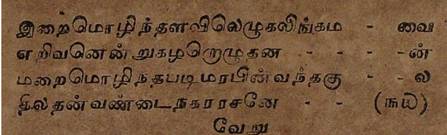
Two photographs of the actual palm leaves establish that படி is a manuscript reading. Both manuscripts are held by the U. V. Swaminatha Iyer Library. The comparison below concerns the letter in this stanza. The dates and textual relationship of the two copies remain uncertain, though.[20] However, it is not a significant dampener on the argumentation.
Figure 6. MS 1415, image 038, blue label 37. The stanza starts on the right of line 5. In line 6, after the first string hole, the sequence contains ழிந்தபடி. The shape of டி differs from தி in குலதிலகன் farther along the same line.[21]
Figure 7. MS 1416, image 029, blue label 28. The stanza begins at the end of image 028 and continues here, with மறைமொழிந்தபடி near the middle of the top line.[22]
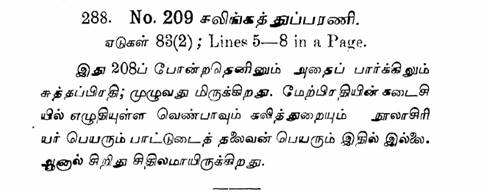
The Sarasvati Mahal catalogue lists seven copies, nos. 208–213 and 563, as entries 287–293. It says the copies vary among themselves and from the prints and confirms Gopala Aiyar’s use of the collection. The catalogue gives descriptions and sample lines without transcribing XI.30.
Searches in Gyan Bharatam, the National Mission catalogue and IGNCA’s Thanjavur microfilm index did not locate a public image for these witnesses.[23]
Figure 8. Sarasvati Mahal catalogue, p. 228. Entry 288 identifies MS 209 as complete and cleaner than MS 208.[24]
However, at the current level of rebuttal, I don’t think we need to scrounge around for more witnesses.
8
Iyengar’s Conjecture and the Circulated Extract
…In கருணாகரன்மரபு, §11 of his 1925 study, Mu. Raghava Iyengar quotes the poem with படி.
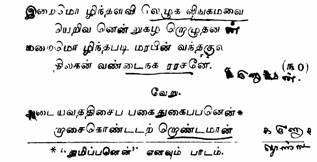
He regards the resulting lineage description as unsatisfactory, proposes பதி, identifies the lord as Brahmā and suggests that a scribe taking dictation confused the sounds. His positive citation is to a Pallava inscription. He names no manuscript reading பதி for this stanza.
In discussion of a different reading he identifies a Madras manuscript explicitly, illustrating the distinction between citing a witness and offering an emendation.[25]
Figure 9. Iyengar’s original argument, Centamiḻ 23(5), p. 179. The quoted verse has the received படி. The prose below proposes பதி and gives the Brahmā interpretation.[26]
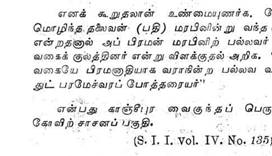
Figure 10. TSK circulated extract. Its typography and page break match pp. 440–441 of the 1984 facsimile of Iyengar’s 1938 collection.[27]
The passage also appeared in Centamiḻ 23(8), p. 302, where a footnote points directly to p. 179. In the collected version the corresponding note points to p. 420, the start of the renumbered §7. In context Iyengar is distinguishing Karuṇākara from Maṇavil Kāliṅgarāyaṉ, whose lineage he reads as Vēḷāḷar in separate inscriptions. The reply in the exchange accurately conveys Iyengar’s interpretation of பதி as Brahmā.
The snippet provided by TSK omits the reasoning by which he arrived at that spelling.[28]
Figure 11. The same argument in Centamiḻ, p. 302, with the footnote referring back to p. 179.[29]
9
Later Scholars and the Pallava Pedigree
N. C. Kandiah Pillai in 1938 and Rā. Raghava Iyengar in 1949 also quote பதி and identify the ancestor as Brahmā. Kandiah cites Mu Raghava Iyengar. elsewhere on the same page.
Of course – Rā. is a different scholar from Mu. and argues separately for a Brahmin origin for the early Pallava clan. K. A. Nilakanta Sastri also prefers the dental பதி and reads the verse as referring to descent from Brahmā. These works establish the reception of the reading.
Figure 12. Rā. Raghava Iyengar, commentary p. 13. He glosses the ancestor as the lord who uttered the Veda and cites the Vaikuṇṭha Perumāḷ inscription.[31]
The genealogy behind Iyengar’s interpretation is independently attested. The inscription at the Vaikuṇṭha Perumāḷ temple in Kāñcīpuram names Brahmā at the head of the Pallava race. The Kūram grant traces a line from Brahmā through Aṅgiras, Bṛhaspati, Bharadvāja, Droṇa and Aśvatthāman to Pallava. The Kāśākuḍi plates add Śaṃyu between Bṛhaspati and Bharadvāja. Their verse 18 combines Brahmin ancestry with Kṣatriya valour in its portrayal of the eponymous Pallava.
Emmanuel Francis treats this genealogy as a royal construction that explains a transition from sages to warriors and kings.[32]
Figure 13. South Indian Inscriptions IV, no. 135(A), the Kāñcīpuram temple inscription cited by Iyengar. Section A names Brahmā in the dynasty’s pedigree.[33]
Figure 14. Hultzsch’s translation of Kāśākuḍi v. 18. The formulation attributes Brahmin ancestry and Kṣatriya valour to the eponymous Pallava.[34]
10
The Kāñcīpuram and Drākṣārāma Inscriptions
Kāñcīpuram names Karunakara
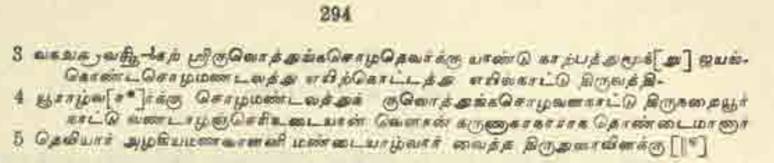
A lamp endowment in Kulōttuṅga I’s 43rd year, c. 1112–13, names Aḻakiyamaṇavāḷaṉi Maṇṭaiyāḻvār as the wife of வேளான் கருணாகரன், alias Toṇṭaimāṉ, of Vaṇḍāḻañcēri in Tirunaraiyūr-nāḍu.
The record is at the Aruḷāḷa Perumāḷ or Varadarāja temple in Kāñcīpuram. Aiyer took வேளான் as a clue to Śūdra status. The title can also denote a headman or official, so its evidentiary weight is lower than an explicit varṇa designation.[35]
Figure 15. SII IV, no. 862, p. 294, lines 3–5. The Tamil identifies Karuṇākara by his personal name and title and records his wife’s lamp endowment.[36]
Drākṣārāma names the father and son
The Sanskrit record dated to Kulōttuṅga I’s 33rd year, c. 1102–03, calls Śīrilaṅgō sac-chūdra-puṅgavaḥ, foremost among good Śūdras. It calls his son Tiruvaraṅga, styled [Vaṇḍu]varāja and Pallavarāja, sac-chūdra-cūḍāmaṇiḥ, the crest jewel among good Śūdras. Both Śūdra terms stand outside Aiyer’s restoration brackets and occur in the earlier Telugu-script edition. The text identifies father and son as Vaiṣṇavas and credits the son with victory in Kaliṅga and a pillar on the Oḍra frontier. The earlier publication is SII IV, no. 1239, ARE 349 of 1893. Aiyer re-edited the record in Epigraphia Indica XXII, no. 23, pp. 138–145.[37]
Figure 16. Epigraphia Indica XXII, p. 143. The two Śūdra epithets occur in lines 6 and 9–10 of Aiyer’s Sanskrit edition.[38]
The same record uses brāhmaṇa for ten beneficiaries of the grant. It thus distinguishes the social terms used of the beneficiaries from the epithets applied to the commander and his father.[39]
11
The Commander’s Identity and the Campaign Chronology
Aiyer identifies the two commanders through the cumulative match. The records place them in Tirunaraiyūr-nāḍu and give closely corresponding home names, Maṇḍalañjēri and Vaṇḍāḻañcēri. The Sanskrit titles correspond to the poem’s lord of Vaṇḍai and Pallava chief. Both accounts place the commander in Chola service and credit him with a Kaliṅga victory and a victory pillar. The distinct personal names and the partly restored [Vaṇḍu] title make the identification an inference.
Balasubrahmanyam, Rajaguru and Kuṭavāyil Bālacuppiramaṇiyaṉ also accept the identification. It is obvious that the explicit term Śūdra carries more weight about the commander’s family than a pedigree inferred from a disputed reading.[40]
Now. It is agreed that the identity of the commander and the identity of the expedition require separate judgments – so that there are no gaps in logic or loopholes and escape hatches.
Aiyer equated the expedition in the c. 1103 record with the poem’s campaign and dated it to c. 1076–77. He identified its Devendravarman with Rājarāja I. Nilakanta Sastri accepts the identification of the man and expressly rejects the equation of the campaigns. Sastri and Balasubrahmanyam place the poem’s campaign around 1110, against Anantavarman Chodaganga. On that dating, the c. 1103 inscription records a different campaign.[41]
Figure 17. Gopala Aiyar, p. 53, v. 362, corresponding to XI.64 and Project Madurai v. 375. The reading அனந்த பன்மன் names the king.[42]
The king’s name is itself a textual variant. Aiyer reports that Subbaraya and Suryanarayana Sastri read words corresponding to adipaṉ vīram at this point, where Gopala Aiyer prints அனந்த பன்மன். His gloss connects it to the inscriptional Anantavarman Chodaganga. In an endorsement appended to the 1923 edition, S. Krishnaswami Aiyangar calls the naming of Anantavarman a new feature and notes the wider manuscript base. Kanakasabhai’s 1890) gloss says only the ‘King of North Kaliṅga.’ Though this dating debate is somewhat inconclusive (to the extent that I could figure out), it leaves the varna terms in the inscription unaffected.[43]
12
Other Military Claims and the Conclusion
The poem securely celebrates Karunakara’s command in Kaliṅga. The Drākṣārāma record gives broader conquest praise. Oṭṭakkūttar’s Vikrama Cholan Ula, couplets 68–69, credits a Toṇṭaimāṉ celebrated in a paraṇi with victories against several rulers. Vengadaramaiah discusses those passages as evidence of further service. The Ula couplets give no personal name, dates or count of campaigns. Iyengar’s distinction between Karuṇākara and Maṇavil Kāliṅgarāyaṉ matters here, because crediting Karuṇākara with the latter’s separately attested exploits would inflate his record.[44]
But, it also important to note that the general claim that Brahmins could command Chola armies – is sound and attested.
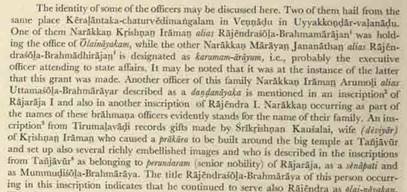
The edition of the Karandai Tamil Sangam plates discusses a Brahmana family and identifies Krishnan Raman, titled Mummuḍi-Chola-Brahmamārāyaṉ, as a sēnāpati. The comparison shows what affirmative documentation of Brahmin background can look like. The specific evidence for Karuṇākara points in the other direction.[45]
Figure 18. K. G. Krishnan’s edition of the Karandai Tamil Sangam plates, p. 28. The discussion connects the named commander Krishnan Raman with the documented Brahmana family.[46]
Conclusion
The conclusion is that Karuṇākara Toṇṭaimāṉ was not of Brahmin extraction.
This judgment rests on the identification, accepted by multiple scholars, of Karuṇākara with the Pallavarāja of Drākṣārāma. The record explicitly classifies that commander and his father as Śūdras.
The Kāñcīpuram title வேளான் supplies a separate, less decisive clue. The evidence supports a varṇa designation for the family on that identification. Of course, it does not establish a narrower jāti.[47]
The claim of Brahmin birth would still lack support if the identification were set aside.
The early prints and the two inspected leaves attest படி. Iyengar’s proposed பதி is a possible dynastic allusion to Brahmā, and the Pallava inscriptions explain why it appealed to him. Neither the Vedic formula nor the dynastic pedigree demonstrates that Karunakara’s immediate family was Brahmin.
The uncalled-for allegation by TSK that history is being twisted [in this context of Karuṇākara Toṇṭaimāṉ] adds no evidence to the claim.[48]
** (okay, I tool 2 hours for the prep work & 9+ hours for assembling this write up *phew* – and what do you think, mY fellow 7½s? Is it worth ‘publishing’ in this format with so much effort at all etc, eh?)
இந்த ‘கருத்துக் கலை’ என்பது என்னிடம் கலையாகப் பரிமளிக்கவில்லை, பரிமளிக்கக் கூடிய சாத்தியக்கூறும் இல்லை என்பது உண்மை. ஏனெனில்.
சில சங்கடமளிக்கும் ஆனால் சுதந்திரப் படுத்தும் சிந்தனைகள்…
1
ஏனெனில், கருத்துகளை எப்படி, எதற்காக அளிக்கிறோம் – என்பது, நம் எண்ணங்களைப் பிறருக்கு நேரடியாகச் செலுத்துவதற்கான ஊற்றுக் கண்களைப் பொறுத்த விஷயம்.
ஒன்று; அதாவது, தகவல் பரிமாற்றத்துக்கான வழிமுறைகளும் அதன் முறைமைகளும்.
இன்னொன்று – அப்பரிமாற்றத்தின் வழி நேரடிக் கருத்துகளைச் சொல்வதற்கு அப்பாற்பட்டு, நம் மனோபாவத்தையும் நமக்கும் கேட்டு/படித்துக்கொண்டிருப்பவருக்கும்(~ ‘வாசகனுக்கும்’) இருக்கும் உறவையும் சுட்டுதல்…
“வெட்டினால் ஒன்று துண்டு ரெண்டு – அப்டீன்னு பேசிடணும்! அப்டிதான் எனக்குப் பழக்கம்!! நீ புண்பட்டால் எப்படியே கெட்டுப்போ! எனக்கொரு பிரச்சினையும் இல்லை!”
“நான் யார், எவ்வளவு பெரிய்ய அறிவாளி, தெரியுமா?”
“டேய், இதோ என் கர்த்து… புட்ச்சிக்கினு ஓட்றா டேய்!”
“இதையெல்லாம் உனக்கு விலாவாரியாகச் சொன்னால் புரியாது, நீ எளிமையானவன்… இருந்தாலும்…”
“இம்மாதிரி சிக்கலான விஷயங்களையெல்லாம் நான் எப்படி மிகத் தெளிவாக அணுகுகிறேன் பார்க்கிறாயா?”
“நான் மிக முக்கியமானவன், பெரும் செயல்பாடுகளில் இருக்கிறேன்! ஏதோ போனால் போகிறது என என் கருத்துகளை உன் மேன்மைக்காகச் சொல்கிறேன்! ஆகவே, நான் சொல்வதை, உன் நன்மைக்காக, நீ மிகமிகக் கவனமாகக் கேட்க வேண்டும்!”
“விட்டேற்றித்தனமாகப் பேசுகிறேன். எனக்கு போரடிக்கிறது, ஆகவே பிடித்துக்கொள் இந்த வம்பை…”
“ஃப்ரீயா ஜாலியா பேஸ்றேன்… லூஸ்ல வுடு…”
“நான், ஒரு கேளிக்கைகாகச் சொல்கிறேன்! நானே என்னை படுஸீரியஸ்ஸாக எடுத்துக் கொள்வதில்லை, அதையேதான் நீங்களும் செய்ய வேண்டும், சரியா?”
“நான் எவ்வளவோ பெரிய உன்னதமான விஷயங்களைப் பற்றிப் பேசுகிறேன்! ஆனால் எவருமே இதற்குச் செவிசாய்ப்பதில்லை… *ப்ச்* இதெல்லாம் விழலுக்கு இறைத்த நீர்… கடைவிரித்தேன் கொள்வாரில்லை, கட்டிவிடவும் மனதில்லை…”
“இதைச் சொல்லவேண்டும் எனத் தோன்றியது… சொல்கிறேன்.”
“யாம் பெற்ற பேறு, பெருக இவ்வையகம்.”
“…”
… … இன்னமும் பல இப்படி அப்படியென்று இருக்கலாம்… ஆனால் என் அனுமானத்தில், என்னிடமும் பிறரிடமும் கலவைகளாகவும் வண்டல்களாகவும் இருக்கும் பாவனைகளையும் சால்ஜாப்புகளையும் பற்றித்தான் சொல்ல முடியுமல்லவா?
2
என்னைப் பொறுத்தவரை, நான் எனக்காக – ஒரு தொடர் பயிற்சிக்காக மட்டும்தான் எழுதுகிறேன். இதன் மூலகாரணம் – எழுதும்போதுதான் (குறைந்த பட்சம் எனக்காவது) ஒருமாதிரி கோர்வையாகவும், தர்க்கபூர்வமாகவும் சிந்திக்க முடிகிறது. என் முன்முடிவுகளைக் குறித்து அலச முடிகிறது. மனதளவில் சுற்றுச்சூழல்களை மறந்து, அவற்றின் இரைச்சலுக்கு அப்பாற்பட்டு – குறிப்பிட்ட விஷயங்களைக் குறித்து ஓரளவு குவியம் கொள்ள முடிகிறது.
தினமும் சுமார் ‘தமிழில் 400 வார்த்தைகள்’ எனவொரு கணக்கு. எனக்கு மனதில் பட்டதை எழுதுவேன் – ஆனால் இது நாட்குறிப்பு வகை அல்ல. மேலும் நான் எழுதுவதில் சுமார் 95%+ இந்த ஒத்திசைவு தளத்திலோ, X-குறும்பதிவுகளாகவோ அல்லது வேறெங்கோ பதிப்பிக்கப் படுவதில்லை. (தப்பித்தீர்கள், சகஏழரைகளே!)
மேலும் – என்னுடைய பிற – குவியங்களுடைய, ஆர்வங்கள் சார்ந்த, மேலும் தொழில்நுட்பம் உள்ளிட்ட குறிப்புகள் (புத்தகங்கள்+வியாசங்களின் சாராம்சம், அல்லது டெக்னிகல் நுணுக்கங்கள்++ என் அனுமானங்கள்++) இவையெல்லாம் ஆங்கிலத்தில் தான் இருக்கின்றன.
(நிறைய, நுட்பமான விஷயங்கள் குறித்துத் தமிழில் சிந்திக்க, தமிழிடமும் என்னிடமும் தேவையாக கலைச்சொற்கள் இல்லை, அறிவுப் பின்புலங்களும் இல்லை – இது கொஞ்சம் விசனம் தருவது ஆனால் சத்தியமான உண்மை… மேலும் நான் வெறும் ஒரு தமிழ் ஆர்வலன் தான் – வாயோர நுரைதள்ளும் வெறியனல்லன்)
சுமார் 1991 வரை போல – நான் தமிழில் பெரும் ஆர்வம் கொண்டவனாகவும் இருந்தேன். அந்த வருடத்தில் நான் பிரத்யட்சமாகக் கண்ட அசிங்கமான உண்மைகளின் காரணமாக – தமிழில் எழுதுவதை நிறுத்தியிருந்தேன் படிப்பதையும் நிறுத்தினேன் – ஏனெனில் எனக்குத் தமிழில் அல்லது தமிழ்வழியாகக் கற்றுக் கொள்ள பெரிதாக ஒன்றும் இல்லை என்பது என் அனுமானமாக இருந்தது – இன்றுவரை அது சுமார் 90% தொடர்கிறது என்பது வேறுவிஷயம்…
பின்னர் 2006 வாக்கில் மறுபடியும் சொந்தக் குறிப்புகளாக “ஐயோ! நான் தமிழில் சிந்திப்பதையே நிறுத்தி 15 வருடங்களாகி விட்டனவா!” என யோசித்து ஆரம்பித்து – 2011 முதல், இந்த ‘ஒத்திசைவு தளம்’ வழியாக சிலவற்றைப் பதிக்கவும் செய்கிறேன்.
ஒருமாதிரி நகைச்சுவையாக எழுதுவதும் பிடிக்கும். நான் எழுதியவற்றை நானே படித்துப் புளகாங்கிதம் அடைந்து இன்பலாகிரி பெறுவதும் நடக்கின்றன – இவற்றிலும் ஏறக்குறைய 90:10 விகிதம்தான் பதிவேற்றம் அடையும். (தப்பித்தீர்கள் நீங்கள்!)
சென்ற வாரம் – ஜெயமோகன் சாருநிவேதிதா எஸ்ராமகிருஷ்ணனாதிகள் ஒரு அறிவுசார் கலந்துரையாடலில் இருப்பது போல எழுதினேன். எனக்கே படுசிரிப்பு.
ஆனால் இப்போதைக்கு அதனை வெளியிடுவதாக இல்லை. கவலை வேண்டேல்.
3
ஏன் – இவ்வளவு கதைகதையாய் எழுதுகிறேன் என்றால்… அண்மைக் காலம் வரை, எனக்கு இருக்கும்/இருந்த சிலபல தொடர்புகள் + ஆர்வங்கள் காரணமாக – நம் மக்கள் அவர்களுடைய வரைவு வடிவ நாவல்கள், சிறுகதைகள், கவிதைகள் என அனுப்புவார்கள் – அதாவது என் மேலான ப்ளட்டி கருத்துகளைக் கேட்டு…
ஆனால்… இதனை மாதிரிக் கொடூரமான, ரத்தத்தை உறையவைக்கும் கொடுமை என வேறொன்று இல்லை.
இதை என்னால் நிச்சயமாகச் சொல்லமுடியும்.
என் குறிப்புகளில் இருந்து ஒருமாதிரி டேட்டா எடுத்து அங்கலாய்ப்புடன் சொல்கிறேன்: இந்த ஜென்மத்தில் இதுவரை இப்படிச் சுமார் 25-30 நாவல்கள், 40-50 சிறுகதைத் தொகுப்புகள், 100+ கவிதைத் தொகுப்புகள், 10 போல கட்டுரைத் தொகைகள், 100+ குறிப்பிட்ட/தனி சிறுகதைகள்… … (இவற்றைத் தவிர மடித்து ஸ்டேப்ளர் பின்னடித்து ‘தனிச்சுற்றுக்காக மட்டும்’ வகை சிறுபத்திரிகைச் சுயமைதுனங்கள்++) – பெரும்பாலும் கொடுமைகள்… இவற்றையெல்லாம் படித்துத் தொலைத்திருக்கிறேன்…
மூன்றே பேருக்கு அவர்களுடைய ஆங்கிலக் கட்டுரை புத்தக வரைவுகளில் உதவியிருக்கிறேன் + எடிட் செய்திருக்கிறேன்; ஆனால் அவர்களுடைய 7 புத்தகங்களில் 4 நிஜமாகவே குறிப்பிடத் தக்கவை. இவர்களில் இருவர் ‘இடதுசாரி அறிவுஜீவிகள்’ எனத் தம்மை வரித்துக் கொள்பவர்கள். நான் அப்பெபர்களை வெளிப்படுத்தினால் சங்கடப் படுவார்கள், ஏனெனில் நான் ஒரு ‘சங்கி.’ நன்றி. இன்னொருவர் அப்படியல்லர், மூளை ஓரளவுக்குப் பணிமூப்பு அடையாமல் இருக்கிறது அவருக்கு. இருந்தாலும்.
யோசித்தால் ஐந்தாறு தொழில் நுட்பப் புத்தகங்களுக்கும் இப்படி ‘அணில்’ உதவி செய்திருக்கிறேன். ஆனால் அவை உண்மைகளைக் கணித-அறிவியல் பூர்வமாக அணுகுபவைகள். இலக்கிய – பொருளாதார இன்னபிற வகை பம்மாத்துகள் அல்ல.
தமிழைக் கூறுபோட்டுக் கூவிக்கூவி விற்கும் நல்லுலகுக்கு மறுபடியும் வருகிறேன்: இப்போது ‘பிரபலமாக’ இருக்கும் சிலபலர் இந்த ‘அனுப்பியோர் ஜாபிதா’வில் இருக்கிறார்கள். பல தேய்ந்து-மறைந்து போன அந்தக் கால அலக்கியவாதிகள் இருக்கிறார்கள். ஆனால் எவர் பெயரையும் வெளியிட முடியாது. அவர்களும் நிம்மதிப் பெருமூச்சு விடலாம். இதைப் படிக்கும் (அதாவது – இந்தக் காட்டுரையில் இதுவரை நீங்கள் நீந்தி வந்திருந்தீர்களானால்…) நீங்களும்தான்!
4
சரி. இப்போது சிலபல சுவையான ‘கருத்துதிர்த்தல் கொலைக்கலை’ எஸ்எம்எஸ் வகைக் குறிப்புகள்:
பிரச்சினை என்னவென்றால் – நீங்கள் ஒருவருக்கு – முகதாட்சணியம் பார்த்து குறிப்பு – ஊக்குவித்தல் உதவி-கிதவி எனச் செய்துவிட்டால் – பிற சில அதேபோன்ற இலக்கியவாதிகளும் இதனை மோப்பம் பிடித்து, “அன்புடையீர், கவிஞர் குடமூக்கின்இறை என் நண்பர், நீங்கள் உதவுவீர்கள் எனச் சொன்னார். இதோ என் கவிதைத் தொகுப்பு, புதிய சகாப்தம் படைக்க என் புரட்சி பூபாள அரை கூவல்… உங்கள் கருத்துகளை அவசியம் பகிரவும்…. அன்புடன், யுகப்புரட்சிப் பிரதாபன்” எனத் தொடர் கெர்ரிலா அட்டேக் செய்துவிடுவார்கள். திக்குமுக்காட வைத்துவிடுவார்கள்… வைரல் மார்க்கட்டிங் ப்ரேஸ்ஸியர் எல்லாம் அந்தக் காலத்திலேயே அமோகமாக இருந்தன, என்னெருமை அம்மணிகளே அம்மணர்களே!
-0-0-0-0-
ஒருவருடைய கவிதைத்(!) தொகுப்பை பெற்றுக்கொண்டு அதற்கு தேவைமெனெக்கெட்டு (அவர் என் கருத்துகளைக் குறிப்பாகக் கேட்டதால்) பிற விஷயங்களைப் படித்துப் பின்புல ஆராய்ச்சியும் என்னிடம் இருந்த ஆங்கிலக் கவிதைத் தொகுப்புகளையும் ‘மறு வாசிப்பும்’ செய்யும்போது அவர் கவிதாயினி ‘ஸில்வியா ப்ளாத்’ கவிதைகள் சிலவற்றை அலேக்காகத் திருடியிருக்கிறார் எனத் தெரிந்தது.
அவருக்குச் சுருக்கமாக ஒரு 15 பைசா தபால் அட்டையில் “ஸில்வியா ப்ளாத் புளகாங்கிதம் அடைவார், அவர் மட்டும் உங்கள் மொழிபெயர்ப்புகளைப் படித்தால்..” என்பதுபோல எழுதியபின்…
… அவர், தம் நண்பரிடம், “ராம் இப்படி பாப்பார ஜாதிவெறியனாக மாறிவிடுவான் எனக் கனவிலும் நினைக்கவில்லை.”
-0-0-0-0-
இன்னொருவர் தன் கவிதைப் புத்தகத்தை அனுப்பியிருந்தார்… படிக்கப் படிக்க என் ரத்த அழுத்தம் அதிகமாகி எத்தைப் பார்த்தாலும் எரிந்துவிழுந்து கொண்டிருந்தது நினைவிலிருக்கிறது. அவ்வப்போது ஒரு நினைவூட்டல் வேறு…
(அந்தக் காலங்களில் ஈமெய்லும் இல்லை, ஸெல்ஃபோனும் இல்லை, என் வீட்டில் தொல்லைபேசியும் இல்லை – 12 வருட காத்திருப்போர்-வரிசையில் இருந்தேன் அப்போது… இந்த நிலைமையில் (இப்போது தோன்றுகிறது – அந்தக் காலத்தின் அவசரப்படேல் அமைதியே வேறு, சுபிட்சம் இருந்திருக்கவில்லை என்பதும் உண்மைதான்!) …நேரில் பேசவேண்டும், இல்லை கடுதாசி எழுதவேண்டும்… ஆக, வாரத்துக்கு ஒருமுறை “அன்புடையீர், என் முந்தைய நினைவுறுத்தல் மடலைக் கண்டீரா?”
… … இம்மாதிரி விஷயங்களுக்கே அடிவயிற்றுக் கலக்கத்தில் இருந்த நான், இப்போதைய டிங் ப்ளிங் ப்ச்ங்க் நோட்டிஃபிகேஷன் யுகத்தில் எவ்ளோ பெருங்கஷ்டங்களைச் சகித்துக் கொள்ள வேண்டியிருக்கிறது பாருங்கள்… (ஆனால் பல வருடங்களாக எல்லா நோட்டிஃபிக்கேஷன் இரைச்சல்களுக்கும் சமாதி கட்டியிருப்பதால் கொஞ்சம் ஆசுவாசம் – இருந்தாலும் சுற்றி இருப்பவர்களும் இப்படிக் கிறுக்கர்களாக இருக்கவேண்டுமே! பலப்பலருக்கு க்ளிங் ப்ளிங் என நோட்டிஃபிகேஷன் வந்துவிட்டால் அடுத்த நொடி ஃபோனை நோண்டாவிட்டால் உயிர்போய்விடும் என நினைக்கும் போக்கு, என்ன செய்ய…)
சரி… மேற்படி கவிங்கர் கடைசியாக, ஒருமாதிரிக் கோபதாபத்தில். “அன்பின் ராம், என் கவிதைத் தொகுப்பைப் படித்தீர்களா? கடந்த 8 நினைவூட்டல்களுக்கு நீங்கள் பதிலே அளிக்கவில்லை. உங்கள் கருத்து என்ன? வரைவை அச்சுக்கு அனுப்பவேண்டும்… முடியவில்லை என்றால் சொல்லுங்கள், நம் உறவை முறித்துக் கொள்வோம்!” என்பது போலப் பரிதாபமாக எழுதினார்…
அவருக்கு உடனடியாக, மிகுந்த மகிழ்ச்சியுடன் ஒரு 15பைசா தபாலட்டையில் எழுதினேன்: “அன்புள்ள கவிஞர் யுகப்புரட்சி பாரதிகரிகாலன் அவர்களுக்கு, உங்கள் கடிதம் கண்டு மகிழ்ந்தேன். உங்களுடைய வரிகள் சத்திய வார்த்தைகளுள்ளவை; அவற்றிலேயே என் கருத்தும் பொதிந்திருக்கிறது, ஆமோதிக்கவும் பட்டுள்ளது என்றால் மிகையாகாது. ‘கவிதைத் தொகுப்பைப் படித்தீர்களா’ எனக் கேட்டுள்ளீர்கள் – அதற்கு என் பதில் ஆம். மேலும் நீங்களே பதிலாக – அக்கேள்வியில் பொதிந்துள்ள ‘குப்பை’ என்பதைக் கோடிட்டுக் காண்பித்துள்ளீர்கள், எனக்கும் அதே கருத்துதான். நன்றி. வாழ்க வளமுடன்.”
என் மதிப்புரையைப் பெற்றுக்கொண்ட அவர் எப்படியும் உறவை முறித்துக்கொள்வார் என நான் நினைவிலும் கனைக்கவில்லை, என்ன செய்ய, சொல்லுங்கள்…
-0-0-0-0-
இன்னொருவர், புதியகார்க்கி – ரத்தத்தைச் சுண்டவைக்கும் கட்டுரைப் புத்தகம் ஒன்றை அனுப்பியிருந்தார், எப்போதோ சிலகாலம் நானிருந்த கட்சித் துணுக்கின், தொடர்ந்த தீவிர பக்தர் – இன்னொரு அறிமுகம் என்னிடம் இவரைக் கழற்றிக் கோர்த்துவிட்டு எஸ்கேப் ஆகியிருந்தார். மார்க்ஸிஸ்ம்-லெனினிஸ்ம் வகை.
ஆதிக்க சாதிகளையும் சுரண்டல்வாத முதலாளித்துவத்தையும் செமத்தியாகச் சாடிச் சாட்டையால் விளாறி ரத்தம் பீச்சியடிக்க உடலை நறுக்கி உப்புக்கண்டம் போட்டு+++… ஒவ்வொரு பத்தியிலும் பற்றவைக்கும் திகுதிகுப் புரட்சித் தீ! ஆனால் பத்தியில் ஒரேயொரு வாக்கியம்தான். பத்திகளும் முக்கால் பக்கம்! படிக்கப் படிக்க மூச்சே அடைத்து விட்டது, என்ன செய்ய…
…இதனை வைத்துக்கொண்டு என்ன செய்வது என்கிற பயத்தில் இருந்தேன்… புதியகார்க்கியும் எஸ்கேப் நண்பரும் நினைவூட்டல்களை அனுப்பி, ஒரு தொடர் கொசுத்தொல்லையில் என்னை நிலைகுலைய வைத்துக் கொண்டிருந்தார்கள்.
புகா கடைசியில் ஒரு அஞ்சலட்டை: “தோழர், மதிப்புரை அனுப்பமுடியுமா முடியாதா?”
என் உடனடி பதில். “அன்பரே! என்னால் மிதிப்புரை வேண்டுமானால் அனுப்பமுடியும். நன்றி.”
பின்னர் அவர், என்னுடைய பெட்டி பூர்ஷ்வாத்தனம் பற்றி நீண்டதொரு நீலக்கலர் இன்லண்ட் லெட்டரில் சுவையாகத் திட்டியிருந்தார் என நினைவு…
-0-0-0-0-
ஒரு நாவல்காரர் (இது சுமார் 3 வருடங்கள் முன் நடந்ததால் இவருக்கான ஒரு ர்கசியக் குறிப்பும் கொடுக்கப் போவதில்லை) – வெறும் நா என்று மட்டும் இவரைக் குறிப்பிடுகிறேன். அவருடைய பின்புலம் பற்றி எனக்குக் கொஞ்சம் தெரியும், சாதாரண சராசரிதான் ஆனால் தன்னைப் பற்றி பெரும் அதிபுனைவு பிரமைகளைக் கொண்டிருந்தவர்… முரட்டுக்கதர் ஜிப்பா போட்டவெனெல்லாம் ஒத்திசைவு ராமசாமியாகி சாமியாட முடியுமா என்ன?
இந்த நா ப்ளட்டிமேனுடைய நாவலை, ஏதோ ஒரு பசையுள்ள ஆசாமி பதிப்பிக்கிறார் எனச் சொன்னார். (இவர் எல்டிடிஈ பிரபாகரனின் இயக்க பினாமி பணமேலாளர்களில் ஒருவர், வெறி பிரபாகரனின் 2009 கணக்குத்தீர்ப்பு நன்முடிவுக்குப் பின் இவர் கழன்றுகொண்டு ஒரு தமிழ்ப் பதிப்பகத்தையும் ஆரம்பித்தார் எனக் கேள்வி…)
…ஆக, இவர் இஷ்டத்துக்குப் பதிப்பித்துக் கொண்டிருந்த புற்றீசல் புத்தகவரிசையில் பதிப்பிக்கப்பட நா-வுக்கரசருடையதும் அப்போது பொறுமையாக க்யூவில் நின்று கொண்டிருந்தது, என நினைக்கிறேன். இதற்குச் சிலபல வருடங்கள் முன்பு இதே பதிப்பகத்தாரின் இன்னொரு நாவலை (இது வேறொரு எழுத்தாளர் – இவர் மீது நன்மதிப்பு கொண்டிருக்கிறேன்) நான் வரைவுப்படிப்பு செய்து குறிப்புகளைக் கொடுத்திருந்தேன்…
இந்த பின்னவர் சொல்லித்தான் முன்னவர் நா என்னை அணுகினாரா என்பது தெரியவில்லை. ஆனால் – உதவி என்று கேட்டுக் கொண்டு வருபவர்களுக்கு என்னாலான உதவி, கோர்த்து விடுதல் போன்றவற்றை ஒரு வழக்கமாக வைத்திருக்கும் நான், நம் செல்ல தமிழ் இலக்கியவாதிகள் ஏற்படுத்தக்கூடிய பேரிடர்பேரழிவு அபாயத்தையும் கருத்தில் கொண்டு என் உயிரைத் துச்சமாக மதித்து அவருக்கு வெகுதைரியத்துடன் – சரி நா ஐயன்மீர், நான் முதல் வரைவைப் பட்டிபார்த்து டிங்கரிங் செய்துகொடுக்கிறேன் என்றேன். யாகாவாராயினும் நா காக்க, என நான் இருந்திருக்கக் கூடாதுதான்… என்ன செய்ய.
நா-க்கில் ஸேடர்ன். நா என்னைப் பதம் பார்த்துவிட்டார். ஒரு பானை சேற்றுக்கு ஒரு மண்ணாங்கட்டி பதம்.
நாவல் – ஒருமாதிரி பாலகுமாரன் + எஸ்ரா +மார்க்கெஸ். அதாவது, கடைந்தெடுத்த குப்பை, நடையே ஜெல் ஆகவில்லை. சுஜாதாவைக் காப்பியடித்து ஒப்பேற்றும் வகை – ஆனால் ஒரு இலக்கிய பாவலா. தொட்டுக்கொள்ள ஈழப்’போர்’ பின்கதை.
கதைகதையாம் கொரோனாவாம். கதாநாயகி சீனாவில் வூஹான் பரிசோதனைச் சாலையில் கொரோனா வைரஸ்ஸுடன் சல்லாபம் என்பது போல… ப்ளடி.
இதில் பல பிரச்சினைகள்: நா அடிப்படையில் ஒரு பிஏ/இளங்கலை-சமூகவியல் – இது கவைக்குதவாத படுகுப்பை என்றாலும் எல்லோராலும் வெகுவாக விரும்பப்படும், படுடிமாண்டில் இருக்கும், உலகத்திலேயே ஆகச்சிறந்த பெருமை மிக்க ‘படித்து முடிப்பதற்கு முன்னாலேயே கேம்பஸ் ரெக்ரூட்மெண்டில் வேலை கியாரண்டீ’ வகைபடிப்பான பிஏ/இளங்கலை-தமிழிலக்கியம் படிக்க முடியாது என்பது எனக்குத் தெரியும்…
எனக்கு, சமூகவியலோடு பிணக்கு இல்லை, அது பாவம் ஒன்றுமறியா ஒட்டுண்ணி ஜீவன் – ஆனால், அதன் காரணமாகவோ என்னவோ இந்த நா – வடக்கம் இல்லாத ஆசாமிக்கு அறிவியல் என்பது சுட்டுப்போட்டாலும் வராது. அதனால் அடிப்படை அறிவியலில் ஏகப்பட்ட பரிதாபமான சொதப்பல்கள், தேவையா என நோக வைக்கும் விளக்குமாறுக்குப் பட்டுக் குஞ்சலங்கள். + கதாநாயகனாக தன்னை வரித்துக் கொண்டிருந்த சமூகவியலாள நா…
+ஏதோ கவர்னமெண்ட் பொதுத்துறை நிறுவனத்தில் ஆஸ்தான அதிகாரி-குமாஸ்தா, அவரைச் சொல்லியும் குற்றமில்லை, பாவம். என் தனிப்பட்ட பிரச்சினை என்னவென்றால், நா-வார் தன்னுடைய தனிப்பட்ட வரலாற்றுக் கதைகளையும் நைஸ்ஸாக நாவலில் உள் நுழைத்திருந்தார். ஆனால் எதுவுமே கோர்வையாக இல்லை.
மூச்சு முட்டினாலும் 700 பக்க எழவை (கணிநியில் தான்!), ஒப்புக் கொண்ட எழவுக்காகப் படித்துத் தொலைத்தேன். (என் ஆயுள் இதனால் சில வாரங்களாவது குறைந்திருக்கும் என அனுமானிக்கிறேன் – அதனால் என்ன, ஒன்றிரண்டு வெண்முரசு செவ்வெக்காளம் பச்சைக்குழல் கருப்புப்பிசாசு எல்லாங்கூடத்தான் படித்துத் தொலைத்திருக்கிறேன். ஆகவே.)
“ஆனால் நா, சீனா போயிருப்பதாக நீங்க சொன்னதே இல்லியே! நீங்க எப்படி அத நேர்ல பாத்ததுபோல எழுதறீங்க? யவனராணி சாண்டில்யன் ஐநா யுனெஸ்கோ பெரியார் ஈவெரா டர்புர் போல எழுத வேண்டிய அவசியமேயில்லையே? ஏங்க இந்த அறிவியல் புனைவு எல்லாம்… ‘என்னை நான் மௌனமாக பார்த்துக் கொண்டிருந்ததை உரத்துச் சொல்லி தனித்துவமாகச் சிரித்துக் கொள்ள’ நீங்க என்ன எஸ்ரா-வா?”
“ஐயோ! நான் அவர் எழுதற எல்லாத்தயும் சிலாகிக்கல, ஆனாலும் அவரு சில குறிப்பிடத்தக்க படைப்புகள எழுதித்தான் இருக்காரு, பொய் சொல்லமாட்டேன். இன்னொரு விஷயம்: அது மேஜிக்கல் ரியலிஸ்ம் இல்ல, மேஜிக் ரியலிஸ்ம், சரியா?”
“ஆனாக்க நீங்க சொல்லுங்க… வூஹான் வர்ணனை செய்யறீங்க, அந்தவூரோட தப்புத்தப்பான உள் விவரங்களையாவது பரவால்ல என விட்டுட்றேன், ஆனா டீஎன்ஏ வைரஸ் அப்டீன்னு இஷ்டத்துக்கு அட்ச்சுவுட்றீங்க. வூஹான் எங்க இருக்குன்னாவது பூகோள வரைபடத்துலாவது பாத்துருக்கீங்களா? சும்மா கண்டெய்னர் போர்ட் ஸப்மரீன் ன்னு தாராளமா பேசுறீங்க… அது கடற்கரைல இல்லியே! “
“என்னங்க இது! என்னப் பத்தி உங்களுக்கு தெரியும் ஆனா வாசகன் அப்டியிருக்கமாட்டானே! நான் நான் அப்டீன்னு எழுதினாலும் நான் அந்த நாவலோட நான் இல்லியே! நீங்க ஒரு எழுத்தாளனோட கற்பனைய சிறகொடிக்கிறீங்க! எழுத்து தன் பிரதிய தானே எழுதிக்குதா இல்லையா?”
“ஐயா, ஆனா அடிப்படை விவரங்க சரியே இல்லியே! அங்கதான் பிரச்சினையே!”
“சார், அதையெல்லாம் திருத்திக்கிறேன் – ஆனால் நாவலோட கரு பற்றி நீங்க என்ன நினைக்கிறீங்க?”
“ஐயன்மீர், உங்க நாவல்ல கரு இல்ல, வெறும் கருச்சிதைவுதான் இருக்கு, என்னை வுட்றுங்க, ப்ளீஸ்!”
(நா அவர்களுடைய நாவல் இன்றுவரை பதிக்கப்படவில்லை. பாவம் அந்தப் பதிப்பாளர், இம்முறை தப்பித்துக்கொண்டு விட்டார் போலும்; இருந்தாலும் மெல்லத் தமிழினிச் சாகும் என்றால் அது அதன் கர்மவினைப் பயன், வேறொன்றும் சொல்வதற்கு இல்லை, என்ன செய்ய…)
-0-0-0-0-
இன்னொருவர்; இது தமிழக வரலாறுகள் பற்றிய ஆங்கிலக் கட்டுரைகளைக் கோர்த்த புத்தகம். எனக்கு இந்த வரலாறு மண்ணாங்கட்டி தெருப்புழுதிகளிலும் ஆர்வம் உண்டு என்பதால் மிக்க மகிழ்ச்சியுடன் இவர் புத்தகத்தின் வரைவைப் படித்து கருத்து சொல்ல ஒப்புக் கொண்டேன். (ஒரு பொது நண்பர் கைங்கரியமிது)
பிரச்சினை. ஆரம்பித்த உடனே க்றீச்சிட்டு விட்டது. தயவு தாட்சணியம் பார்க்காமல் விக்கிபீடியாவைவும் போகிறபோக்கில் நக்கி வெட்டியொட்டி அப்படியொரு கதனகுதூகலம். ஜாஜ்வல்யம். விளக்க வார்த்தைகளே இல்லை.
இந்த அழகில் டிஎஸ் கிருஷ்ணன் (இவரும் ஒரு வரலாறு ஆர்வலர், நிறைய்ய்ய்ய எழுதுகிறார், சில சொல்லிக்கொள்ளும்படியாகவே இருக்கின்றன) எழுதிய சில அராஜக விஷயங்களையும் உள்சேர்த்தி… (இது சிதம்பரம் கோவிலருகில் ஏதோ பெரிய அளவு நீர்-பொறியியல் தொடர்பான பெரும் ஆச்சரியம் இருக்கிறது என அவர் இஷ்டத்துக்கு அடாவடியாக அட்ச்சிவுட்டு எழுதியது) – எனக்கு வெறுத்து விட்டது…
“ஐயா, நீங்க காப்பி அடீங்க, ஆனா அதயெல்லாம் கொஞ்சம் சரிபாத்தாவது எழுதக் கூடாதா?”
“ஸ்வாமீ! இதை நானே ஸெல்ஃப் பப்ளிஷ் செய்யப்போறேன், என்னால நாலு பேருக்கு வரலாறு பத்தி ஆர்வம் வந்தா போறும்… பொன்னியின் செல்வன்ல ஆழ்வார்க்கடியான்…”
“ஐயோ ஐயா! எவனுக்கு அடியிலும் அடியில் கண்ட சொத்துதான் ஆடிட்டு இருக்கும். ஆழ்வாரே கடிச்சாலும் கடிக்காம கடுக்கா கொடுத்தாலும் இத்தான் உண்மை… என்ன வுட்றுங்க…”
“சரி. நண்பர் சொன்னார்னு ஒங்க கிட்ட வந்தேன் – உங்க ஃப்ரேங்க் ஒப்பீனியன் குடுங்க, எதுவானாலும் பரவாயில்ல, நான் ரொம்ப ஓபன்…”
“ஐயா, என்கிட்ட க்ரேங்க் ஒப்பீனியன் தான் இருக்கு. நானெல்லாம் உங்க புக் பத்தி ஒப்பீனியன் கொடுக்கற அளவுக்கு பெரிய ஆளில்ல…”
(இந்த விக்கிபீடியர், எங்கள் பொது நண்பரிடம் பொருமித் தீர்த்திருக்கிறார். “அகங்காரம் பிட்ச்ச பொறுக்கி… இவனெல்லாம் எப்டீ ஸ்கூல் டீச்சரா இர்ந்திருக்கான்! போக்ஸோ கேஸ்ல மாட்டிக்கப் போறான்… பாத்துட்டே இருங்க… ப்ராமின்ஸுக்கு இவ்ளொ அர்ரொகன்ஸ் இருக்கறதாலதான் அப்பப்ப தட்டிட்டே இருக்காங்க… …”
நண்பருக்குக் குதூகலம். ஆர்வத்தோடு பகிர்ந்து கொண்டார் – கைகாதுமூக்கு வைத்துச் சொன்னாரோ தெரியவில்லை… எப்படியும், தான் சொல்லமுடியாததை பாப்-வரலாற்றாளர் சொல்லிவிட்டார் என்பதாலும் அவர் மிகுந்த மகிழ்ச்சியோடு இருக்கவேண்டும் எனத் தோன்றுகிறது…)
சுபம்.
இதற்குப் பின்னர், ஒருவருடைய ப்ளடி புத்தகத்தையும் வரைவு அளவில் படிப்பதாக இல்லை, ஏன், இணையக் காட்டுரைகளையும் – என முடிவு செய்திருந்தேன்; அலுப்புதான் முக்கியக் காரணம். எல்லாம் வல்ல இறைவன் தான் (அங்கு முருகன் கோவில் இருப்பது என் குலதெய்வப் பெருமையை அதிகரிக்கச் செய்கிறதே!) என்னைக் காப்பாற்ற வேண்டும்.
அதைவிட முக்கியமாக, எல்லாம் வல்ல இறைவன் – என்னிடமிருந்து தமிழ் அலக்கிய வாதிகளையும் பொழுதுபோக்கு வரலாற்றாளர்களையும் காப்பாற்ற வேண்டும். நன்றி!
-0-0-0-0-
நிலைமைகள் இப்படிக் கவலைக்கிடமாக இருக்கையிலே…
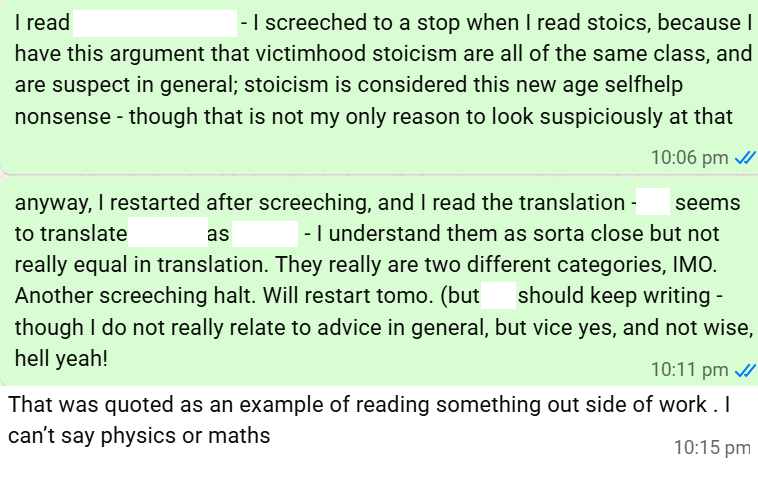
சில வாரங்கள் முன் இன்னொரு ‘இளைஞர்’ ஆர்வத்துடன் எழுதிய தன் கட்டுரையை, நான் உள்ளடங்கியிருக்கும் ஒரு சிறு வாட்ஸ்அப் குழுவில் (தற்போது, என் குடும்பக் குழுவையும் சேர்த்தி மொத்தம் 4 குழுக்களில் இருக்கிறேன், முடிந்தவரை இந்த குழுக்களைத் தவிர்க்கிறேன் – ஓரளவு வெற்றிகரமாக இருக்கிறது இந்த ‘வெற்றி வாட்ஸ்அப் திட்டம்’ ஜோஸஃப்விஜய்க்கு நன்றியுடன்) பகிர்ந்தார்… ஒருமாதிரி ஒப்புக்கொள்ளக்கூடிய அளவில், அக்கட்டுரை (குட்டுரை?) சில விஷயங்களைப் புரிகிறார்போல் பேசியது. அலுவலகத்தின் அலுப்படையவைக்கும் சூழலில் சுயத்தைப் பாதுகாத்து போஷித்துக் கொள்வது எப்படி என்பது போல… பணியை விட்டகலும்போது (அல்லது வெளியேற நேரிடும்போது) அதனை எப்படி எதிர்கொள்வது என்பது பற்றியும்++
அதே சமயம் இன்னொரு நண்பர், பொறுப்புணர்ச்சியுடனும் நாசூக்காகவும் ஆக்கபூர்வமாக கருத்துகளைச் சொல்லிக் கடுப்பேற்றினார், அவர் வழமையே போல.
அவர் கடுப்பேற்றிச் சித்தர்.
ஆனால், என் சொந்த பயங்களின் காரணமாக, கருத்தே சொல்லாமல் டபாய்க்கலாம் என்றால், ஏதோ என் கருத்துகளைச் சுருக்கமாக அல்லது சுருக் என்றாவது சொல்லவேண்டிய நிலையில் என்னை வை(த்)துக்கொண்டு…
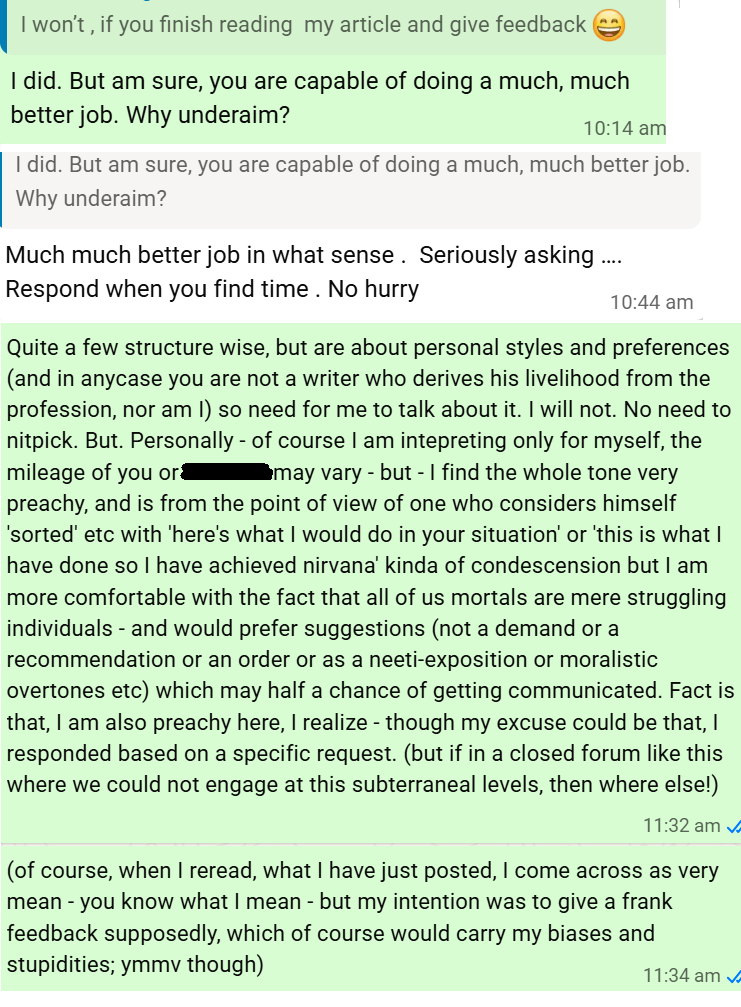
(இவ்வுரையாடலில் ஈடுபட்டவர்களின் ஒப்புதலைப் பெற்றுக்கொண்டு, முடிந்தவரை உண்மை விளம்பிக் குறிப்பான்களை அகற்றிவிட்டுச் சில ஸ்க்ரீன்ஷாட்களைக் கொடுக்கிறேன்; இதில் அவசரகதி செய்திப் பரிமாற்றத்தினால் ஏற்பட்ட இலக்கணப் பிழைகளைப் பொறுத்தருள்வீர்!)
இளைஞர்’ விட(வில்)லை. என்ன செய்ய… (need for me to talk -> NO need for me talk)
*but, if in a closed forum like this, we could not engage at these subterranean levels, then where else could we!
பணிவுடனும் அன்புடனும்,பிறத்தியார்மீது கரிசனத்துடனும் இருப்பவர்கள் – இப்படியா பதில் கொடுப்பார்கள்? நான் கொடுத்தேன். வழக்கம்போலவே என்னைத் திட்டுவார், அல்லது குழுவிலிருந்து வெளியேறி விடுவார், குறைந்தபட்சம் வருத்தத்தில் குமைந்து கொண்டு அமைதியாக இருப்பார் என நினைத்தேன்…
ஆனால், ஆச்சரியப் படவைக்கும் விதத்தில்… அவர் என் கருத்துகளை பரிசீலிக்கிறார் என நினைக்கிறேன் – வெகு நார்மலாகவே இன்னமும் உரையாடல்களில் ஈடுபடுகிறார்… கலிகாலம் தான்!
எனக்கு என்ன சொல்வது என்று தெரியவில்லை – ஆனால் ஒருமாதிரிக் கலக்கம் தரும் மகிழ்ச்சி…
(+பொய் சொல்லக் கூடாது – என்னுடைய “மதிப்புரை”க்கு வந்தவற்றில் சுமார் 2-5% ஓரளவுக்குத் தரமானவைதான் எனத் தோன்றுகிறது; தமிழின் தற்கால நிலைக்கு இந்த விகிதம் மிக அதிகம் என்றாலும் – முதலுக்கே மோசமில்லைதான். நன்றி!)
(அடுத்த பகுதியில் இன்னும் சில சொல்லவேண்டிய பகுதிகள் வரலாமோ என்ன எழவோ!)
This longform post is about languages, roots, transmission directions in the context of Sanskrit & Tamil…
… and more importantly, it seeks to deal with suspect methodologies, premature optimizations, simplistic/superficial generalizations, giant logical leaps, self-referential statements, circular-reasoning, non-existing citations and the like, around some ideas – that have been plaguing the Tamil ‘discourse’ – or what passes for it.
I would also like to ascribe such seemingly unscholarly & infructuous approaches to a child-like eagerness/enthusiasm of some fundamentally good people – to ‘prove’ the ancientestest nature & origins of Tamil, in spite of all the evidence that stare at us in our face and associated kanging – and not to some deleterious motive. Okay – I agree that NOT all such folks are decent & ethical – leave alone being scholarly.
Normally, I do not indulge in major or sustained battles/discussions on X, because in my opinion, the context for the X-platform is not really about longform idea exchanges and also because I am not blue-ticked yet which would have otherwise allowed me to respond in longform. Also – ars longa vita brevis.
Again, I wanted to put in some significant time-effort in terms of approaching & analyzing this particular claim – as there are many many such types of uncalled-for claims that seem to be proliferating in the Tamil<->Sanskrit relationships – and I want to create some kind of a ‘template approach’ to deal with them. An exemplar, if you will.
Yes. I want to approach the claim as rigorously & as politely as possible, with a clear logic and marshalling of whatever evidence that I could muster; but of course I am not at all a Mr KnowAll and I do not have any scholarly pretensions. I continue to be an eager student of Tamil, Sanskrit & English – and assorted other things.
In any case, linguistics++ is only one of my minor interests, really. So, feel free to rebut/join etc in this discussion. Let us all learn together, if we can – with as much civility as needed and possible.
1
Background:
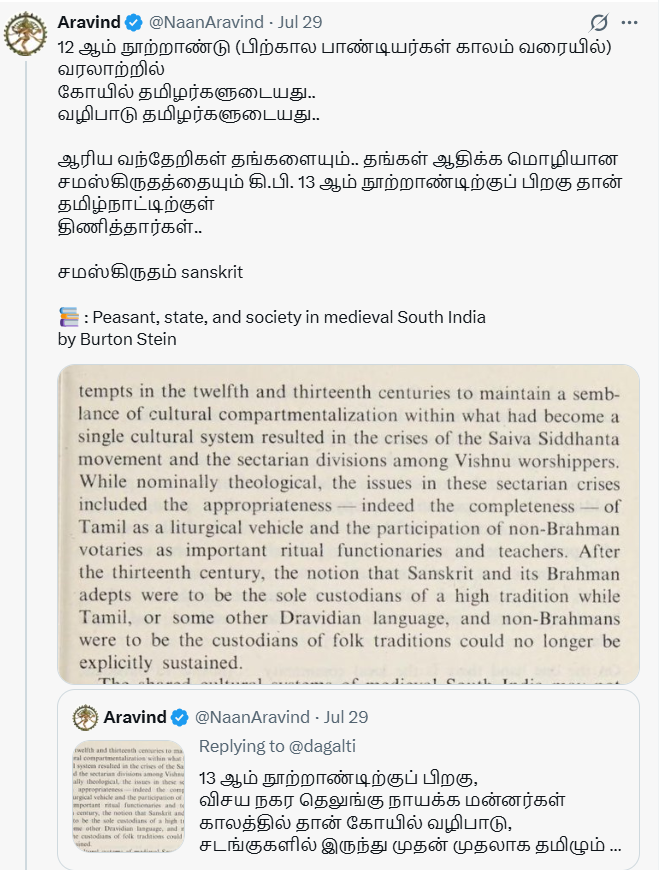
On July 29, 2026 this following discussion happened and I was not privy to that – am providing just the immediate context.
It was one rabid, frothing-at-the-mouth ‘Aravind’ who started off with an obtuse set of TamilSupremacist-Dravidian assertions. Pure unadulterated hatecraft. Usual story/fiction: Aryan invaders foisted themselves and Sanskrit on Tamilnadu post 13th century CE.
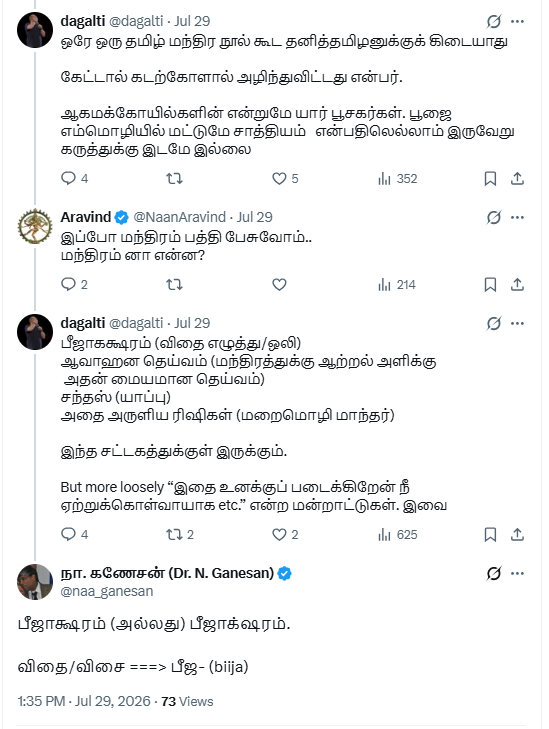
Here’s were Sri N Ganesan (henceforth NG) introduces the idea as in the subject/title of this post.
I responded to him – and this post is the result of that undertaking from me to respond soon.
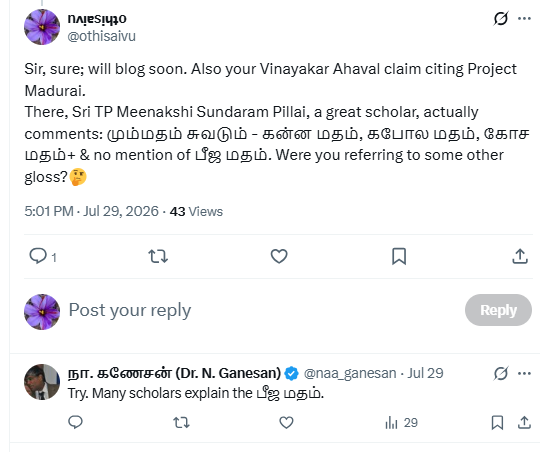
There was also another short exchange between me and NG:
Rest of the post is going to be about expanding on my observation:
~”Sanskrit bīja ‘seed’ derives from Dravidian vittu/viccu/vīca” is NOT established by DEDR 5401 & is phonologically weak as presented.
Ideally I would like to use ‘Dravidian’ instead of Dravidian, since it is a made up category-name chistened fairly recently, unlike the monikers Tamil or Sanskrit. It also has this heavy baggage of having been politically loaded. But, writing ‘Dravidian’ everytime could be jarring, so am avoiding that.
To the extent that my typing would allow for, I have used International Phonetic Alphabet (IPA), showing the correct pronunciation..
2
DEDR 5401
Dravidian Etymological Dictionary of 1984 (often abbreviated as DEDR), is a major academic resource painstakingly compiled and annotated by T. Burrow and M. B. Emeneau. Very reasonably comprehensive.
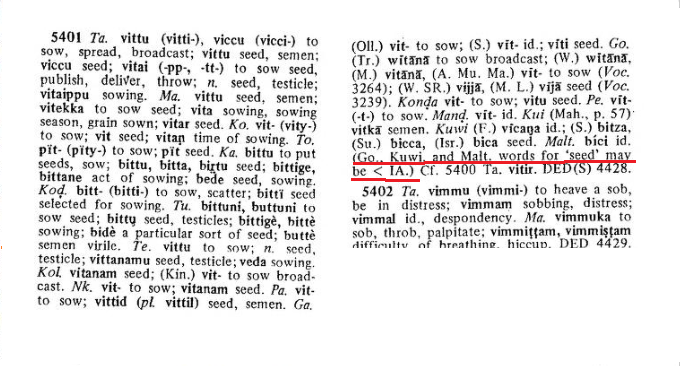
DEDR 5401 refers to a particular entry – that groups a large set of Dravidian forms meaning ‘sow’, ‘seed’, ‘semen’, ‘testicle’, and related notions. The distribution across South, Central and North Dravidian languages makes the underlying Dravidian family cohesive.
It is important to remember as a backgrounder that, DEDR is a comparative dictionary organised into proposed etymological groups, rather than a series of claims that every listed surface form must be inherited directly and regularly.
The important qualification occurs in the entry itself:
“Go., Kuwi, and Malt. words for ‘seed’ may be < IA.”
That warning matters. Burrow and Emeneau were explicitly allowing that forms such as Gondi vījā, Kuwi bica/bicca, and Malto bíci might be loans from Indo-Aryan, presumably from forms related to Sanskrit bīja.
Therefore, these particular forms cannot safely be used as independent evidence for a Dravidian development.
vittu -> viccu -> vīca -> bīja
That would risk circular reasoning. Some of the closest-sounding forms may already be Indo-Aryan loans.
3
What can reasonably be reconstructed for Dravidian?
The underlying family is usually represented approximately as something like:
verbal base *vit- / *vitt-, ‘to sow, scatter seed’
noun *vitt-, ‘seed’
derivatives with suffixes, such as Tamil vitai
The exact Proto-Dravidian reconstruction depends on how alternations among vit-, vitt-, vitay-, vicc- are analysed.
Tamil forms such as:
வித்து vittu, seed, semen
விதை vitai, seed
விதை- vita(i)-, to sow
விச்சு viccu, seed or sowing-related form
…belong to the same general Dravidian lexical family according to DEDR. That much is reasonable.
But DEDR 5401 does not itself reconstruct Sanskrit bīja from this family.
So, the reason as to why this extract was used by NG is not at all clear!
4
Is vittu > viccu plausible?
Tamil and its sister/other languages exhibit historically conditioned palatalisation and alternations involving k/c, c/y, and consonants adjacent to front vowels or y. However, a specific development vittu > viccu requires its own comparative and morphological evidence and should not be justified by a general Tamil rule tt > cc.
One cannot simply posit a general rule:tt > cc, without specifying:
the earlier phonological environment
the chronological stage
parallel examples
whether the form is inherited, dialectal, analogical or expressive
The examples given in the claim of NG do NOT establish such a rule.
பச்சை : பாசி – paccai and pāci cannot simply be treated as an illustration of free cc : c alternation. Their vowel quantities, morphology and lexical histories also need explanation.
கொவ்வை : கோவை – This pair likewise involves more than geminate simplification. It has differences in vowel length and medial consonantal structure.
Similarity alone does not prove that it illustrates the development required for vittu > viccu.
விச்சு : வீசு – This comparison is particularly problematic.
Tamil வீசு vīcu, ‘to throw, fling, wave, blow, spread’, belongs in DEDR to a separate comparison associated with scattering or throwing, referenced by DEDR 5400 vitir- in the quoted entry. DEDR’s “Cf. 5400 Ta. vitir” indicates comparison, not an assertion that vīcu regularly derives from vittu.
A derivation such as vittu > viccu > vīcu would require, at minimum:
tt > cc
loss of gemination cc > c
i > ī
and a semantic development
It may possible that each step might conceivably occur somewhere, but the sequence needs evidence.
It cannot be inferred merely from resemblance as comfortingly assumed & indicated by NG.
In fact, this ‘resemblance’ issue is the one that is there in most of the takes of ‘folk etymologists’ like Mannarmannan & Paari Saalan, that plague the Tamil discussions.
5
The proposed vīca > bīja equation
This is the weakest part of the argument or the process for claim by NG.
Sanskrit bīja /biːd͡ʑa/ ‘seed’ and a proposed Dravidian form vīca or vīja look moderately similar, but historical etymology requires regular sound correspondences.
A borrowing from Dravidian *vitt- into Indo-Aryan as bīja (as claimed by NG) would definitely require explanations for:
Dravidian
Sanskrit
Problem
initial v-
b-
Possible in some borrowing situations, but must be demonstrated
medial -tt-
-j-
No obvious regular substitution
final consonant
final -a
Sanskrit nominal adaptation is possible
short i
long ī
Requires an account or an example
geminate stop
voiced palatal affricate
Major unexplained change, this is surprising
The change *vitt- > bīja- is therefore not a transparent or recognised sound substitution – UNLESS NG can satisfy every one of the above 5 criteria.
One might instead compare the later Dravidian forms vīja, bica, bíci, but DEDR itself warns that precisely these may come from Indo-Aryan.
They are consequently poor evidence for the opposite direction (Dravidian -> Sanskrit) of borrowing.
6
What is the accepted etymology of Sanskrit bīja?
Sanskrit bīja unquestionably means ‘seed’, and by extension ‘germ’, ‘source’, ‘cause’, generative material, semen and, in tantric usage, a ‘seed syllable’. The semantic explanation of bīja-mantra as a compact sound containing generative spiritual potency is traditional and unobjectionable.
I will NOT dispute that its deeper etymology, however, is uncertain at least in my limited knowledge. It seems to lack a straightforward and universally accepted Indo-European derivation. Such uncertainty makes a substrate or borrowing hypothesis possible in principle, but:
‘Uncertain within Indo-European’ does not automatically mean ‘borrowed from Dravidian!’
To establish Dravidian origin, scholars like NG would definitely need:
a reconstructible Dravidian source form predating Indo-Aryan attestation
regular or independently paralleled sound substitutions
plausible geographical and chronological contact
and exclusion of borrowing in the reverse direction
The proposed argument of NG supplies mainly semantic similarity and surface resemblance.
But one needs arguments that are really sound and substantive to present a scholarly take!
7
Is vit- a Sanskrit dhātu derived from Dravidian?
The wording of NG: “vit- is the dhātu-vēr in Dravidian” unfortunately mixes Sanskrit grammatical terminology with comparative reconstruction.
A better formulation would perhaps be: “Proto-Dravidian appears to have had a verbal root or base *vit- / *vitt-, ‘sow’.”
Calling it a dhātu is understandable informally, but Sanskrit grammatical roots and comparative Dravidian reconstructions belong to different descriptive frameworks.
Further, the existence of a (A) Dravidian root *vit- does not show that (B) Sanskrit bīja comes from it.
The two propositions A and B are separate which NG has to note of.
8
The Vināyakar Akaval claim
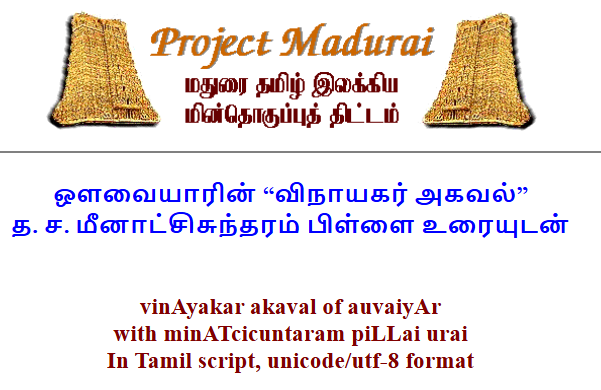
The contentious line is: “மூன்று கண்ணும் மும்மதச் சுவடும்..”
Project Madurai’s text (specifically cited by NG) and commentary interpret மும்மதச் சுவடு as the marks or traces produced by three kinds or streams of elephant rut-fluid. The particular commentary of the great Sri TP Meenakshi Sundaram Pillai, hosted there gives the names of those 3 as: கன்ன மதம், கபோல மதம், கோச மதம்…
…one would suppose that, after referring to the Project Madurai in the context of Akaval, NG would quote this exact reference, actually cited by him!
But NG ‘quotes’ something different! கர்ண மதம், கபோல மதம், பீஜ மதம்!! பீஜ and NOT கோச as in his reference! When asked about NG replied, as in the snippet from the Section1 above – “many scholars explain the பீஜ மதம்.”
I was slightly surprised by the defensive ‘I am my own citation’ kind of response, but that’s not a significant issue in the big picture of a host of other concerning lacunae in the claims of NG.
Of course one is aware that in a few glosses of the phrase mummdam, bīja-mada is given as a lexical explanation – but then NONE of them are of the incredible scholarly levels of Sri TPM Pillai!
Therefore:
மும்மதம் in the poem has no etymological bearing on Sanskrit bīja.
The reading பீஜ மதம் appears to be one modern anatomical or Sanskritising gloss among variants.
Even were bīja-mada an authentic technical term, it would merely use Sanskrit bīja in the sense ‘semen/generative fluid’. It would not prove that bīja originated in Tamil or Dravidian.
The poem ‘Vinayakar Akaval’ brought in by NG to prove his claim, is consequently irrelevant to the proposed etymology.
9
Conclusion
I hope, at least Dr N Ganesan has read this far… :-) In spite of this post is already some 1900+ words in length! Loooooong form indeed! But I think it would be an useful template or a framework to respond to such claims, hopefully… at least for me!
It also took me upwards of 7 hours to process claims, collect details, organize them and then respond comprehensively (one hopes so!) to the claims made by NG.
But.
I would be very eager to know NG’s response (and interested others) in terms of defending or revising his claims – point-by-point AND with tangible, verifiable & scholarly evidence.
Anyway. Here’s hoping this would encourage decent & evidence-logic based discussions on one of the vexatious issues with our Tamil. Thanks.
This was a 12th grade Gestalt moment for me, of course ages ago: Even in ‘Chemical’ reactions, the mass-energy equivalence applies, like mass-defect in the Nuclear ones.
Chemical reaction energies (endothermic/exothermic) arise from electronic interactions++; the associated mass defect is a secondary consequence.
E=mc² For The Win. YES!
1
Many of us erroneously assume that Chemical energy creation (or absorption) does not involve anything like mass-energy equivalence; and that, ‘masses are like totally conserved in chemical reactions.’ That, the ‘sum of the masses of reactants on the left hand side of an equation, are equal to the products/results on the right hand side.’
Our school textbooks (hic) feed the ignorance by creating random differences between nuclear and chemical processes/reactions – which our otherwise mediocre ‘teachers’ follow like automatons; of course, there are obvious differences though.
(having been a school-teacher before – and sorta continuing as a low intensity one-on-one teacher/cheater for a while, and stressing on the idea ad infinitum – I can say with a huge satisfaction that many of my young learners have had such similar gestalt moments of wonder that is Science!)
2
FACT: Even the burning of firewood has to adhere to the stellar idea of Mass-Energy equivalence as fantastically propounded by Albert Einstein.
The basic interaction/reaction in ‘burning firewood resulting in smoke & heat/light’ is of carbon atoms combining with oxygen molecules to produce carbon dioxide:
C + O2 → CO2 + 4.08 eV.
Remember: 1 electron volt (eV) = ~1.6 × 10⁻¹⁹ joule (J) = ~3.83 x 10⁻²⁰ calorie. A calorie is nothing but the heat energy required to increase the temperature of 1 gram of water by 1 degree centigrade; of course 1 eV has a very, very small or insignificant heat equivalent – but, the fact is that it exists.
Anyway. In this exothermic (heat releasing) chemical reaction, 4.08 eV of energy is released for each reacting carbon atom; it is referred to as the binding energy (BE) of CO2 molecule.
Again, as a reverse reaction – if 4.08 eV of energy is given to a CO2 molecule under suitable conditions, it will break up into its constituents as in:
CO2 + 4.08 eV → C + O2
… what this means is 4.08 eV energy leaves the system to form CO2 gas. Therefore, the mass of CO2 molecule will be less than the total mass of C and O2 by a mass equivalent of 4.08 eV.
This loss of mass Δm can be calculated using the brilliant equivalence relation E = mc2 …
Of course, such a small change in mass cannot be detected and we say without batting an eyelid that the mass is conserved in chemical reactions, though slight change of mass does occur.
(In one gram of Carbon, there are ~5.02 × 10²² atoms; when one gram of Carbon is burnt thus, the heat released is 7800 calories)
3
Summarizing various aspects of chemical reactions…
Energies of the order of 10 eV are involved. (in Nuclear ones, the order is in MeV – million/mega eVs = 106 eVs)
Change of mass is of the order of 10–35 kg, which is extremely small and so we claim that the mass is conserved.
The total number of atoms of each type on the right hand side of a given chemical equation is always equal to the total number of atoms of each type on the left hand side.
Chemical energy comes from electronic structure changes (rearrangement of valence electrons, bond formation/breaking) – & is governed by electromagnetic interactions
The mass change is a derived consequence, not the driver
In a chemical bond – the electrons rearrange into a more stable (lower-energy) configuration
ப்ளடி சாதாரணமான ஜெயமோக சாருநிவேதித எஸ்ரா வகையறாக்களையே என்னால்நம்மால் தாங்கமுடியவில்லை, இந்த அழகில் இந்த ப்ளடி அலக்கியவாதி, இப்படி ஒன்றை ஆரம்பித்திருக்கிறார். Read the rest of this entry »
இந்தத் தமிழப் பிரமைகளைக் குறித்து துண்டு துண்டாகவாவது ஆதாரங்களுடன் எழுதி, பின்னர் பின்னடித்து வெண்முரசு ஸைஸுக்குப் புத்தகமாக வெளியிட்டால், வரலாறு காணாத ரீதியில் இன்னமும் அலைமோதிக்கொண்டு எண்ணிறந்தவர், லட்சக்கணக்கானவர்கள் படிப்பார்கள் எனவொரு பகீர்பிரமை எனக்கு…
அதாவது 7½ (ஏற்கனவே உள்ள வாசகர் படை, அடியேன் உட்பட) + 2 (அதிகப்படியாகப் படிக்கப் போகிறவர்கள்) = 100,000+.
உங்களுடைய தொடர்ந்த அனாதரவுக்கு நன்றி. ஆனால் உடும்புத்தைலம் முக்கியம், சரீங்களா?
([Indian Economic & Social History Review 1994-sep vol. 31 iss. 3] Fisher, M. H. – The East India Company’s ‘suppression of the native dak’ (1994))
7
(Oppezzo, Marily Schwartz, Daniel L. Give your ideas some legs – The positive effect of walking on creative thinking – Journal of Experimental Psychology – Learning, Memory, and Cognition, volume 40, issue 4 (2014))
8
(Barua, B. M. “THE SOHGAURA COPPER-PLATE INSCRIPTION.” Annals of the Bhandarkar Oriental Research Institute, vol. 11, no. 1, 1930, pp. 32–48)
9
(Sacrifice and Pagan Belief in Fifth- and Sixth-Century Byzantium, K. W. Harl, Past & Present, No. 128 (Aug., 1990), pp. 7-27)
10
(Thomas G. P Laura C Deanna C Marily O – Perceived Fitness Predicts Daily Coping Better Than Physical Activity or Aerobic Fitnes – International Journal of Stress Management volume 7, issue 3 (2000))
இத்தனை நாட்கள், அயோக்கிய சோம்பேறித் தமிழர்களின் (அதாவது இலக்கியம் மண்ணாங்கட்டீ மசுறு பண்ணுகிறேன் என வெற்றிடத்தை வெறித்து நோக்கியபடி வளையவருபவர்கள் இந்த ஜந்துக்கள் என்றறிக) வெட்டிப் பொழுதுபோக்கு என்பது… Read the rest of this entry »
For a few decades now, I have consciously made it a practice to go thru 3-5 aforesaid fascinating (& scholarly) write-ups per day, if not for anything else, but for at least keeping the gray-cells alive or in a suitable state of being tickled etc – in an otherwise staid, stagnant, stinky & festering blight that the anti-knowledge, anti-intellectual & dishonest – I mean, Dravidian environment… Read the rest of this entry »
மிகவும் நொந்துபோன சில (ஹ்ம்ம், சொல்லப் போனால், பலப்பல) சமயங்களில் இப்படியாப்பட்ட விபரீதச் சிந்தனைகள் மண்டையைக் குடைந்து தள்ளிவிடும். அதே சமயம், “கவலை சரிதான். ஆனால் அதற்கு அப்பாற்பட்டு, தமிள் புட்டுக்கினுபோவாம இர்க்க நான் என்ன மசுத்தை புடுங்கிக் கொண்டிருக்கிறேன்?” என்கிற கேள்வியும் எழும்பும். ஸப்பாஷ் ஸர்யான போட்டீ. Read the rest of this entry »
ஒரு காலத்தில் என் பள்ளி மாணவியாக இருந்த ஷிவானி ஏஞ்சலினா இப்போது ஏதோ மனோதத்துவம் பற்றி உயர்படிப்பு (மலேஷியா) படித்துக் கொண்டிருக்கிறாள். Read the rest of this entry »