Karuṇākara Toṇṭaimāṉ, Kaliṅkattupparaṇi, Kulōttuṅga I’s Drākṣārāmam inscription, Varṇa – untenable & random assertions/claims of Sri S Krishnan, a popular historian – notes
November 9, 2026
1
I am well aware of the sad but real & living idea of Bullshit Asymmetry Principle, also known as Brandolini’s Law; this is about the effort & the energy needed to refute misinformation/fakenews is an order of magnitude (at least 10 times) larger than the energy required to create it.
(…for example, may be the over-enthusiastic gent Sri S Krishnan (TSK henceforth) took some half-an-hour to do ‘research’ and ‘format’ his erroneous & egregious X-post presented in the next section, with some 100+ reposts and likes – but I am aware of my readership numbers (a steady 7½) and also the effort needed for this specific rebuttal.
Though I have possessed the basic context-specific data for more than 15 years—which is why I laughed out loud when I first read TSK’s assertion in this round—to distill everything, ensuring that I miss no fact or angle, marshal all the resources, and present a cogent argument, I have already spent about two hours, and it may take another 6–8 hours** to write this post…)
…see the asymmetry? Bullshit is easy-peasy! But to methodically and clinically take it apart – AND communicate it in a clear, scholarly language is oh so difficult!
…and then, there is this question of ‘in which language I am going to write.’ I chose English as a medium, as it is by default, has more scholarly possibilities and also better readership than 4 or so regular readers of the occasional columns/posts here at Othisaivu. So, here’s hoping some 10 readers would read this labour of jobless-love.
But. Why rebut at all? Why can’t I ignore this as some pure Noise from someone (TSK here) who admittedly has valiantly fought with Dravidoids and Tamil Supremacists rather frequently? One reason is that, in Tamil pop or even ‘serious’ tech/historical discussions – very rarely do we encounter really scholarly and evidence based takes – and I personally want to set an example of how it can be done.
(of course, I am merely a serious student of histories among many other interests, so correctives are welcome – and suggestions to improve the takes in the post would be acknowledged with thanks, though I don’t much care about unreasonable/dravidoid brickbats anyway)
The main reason:
I hold my fellow Bharatiya Conservatives (contrary to rather ‘popular’ myths – far from being all regressive – many of them are briliantly progressive too, in fact many of them are more scholarly, deep, tech-savvy & amenable to reason than their detractors) to MUCH HIGHER standards than what I would do to, say naturally faffing Left-Liberal public intellectuals, with their self-declared progressiveness, erudition and scientific-temper, whatever the fuck they mean by those buzzwords in their own dick-tionaries…
Thanks!
Anyway…
(I have taken the effort to do all these scaffolding & structuring because I want this write-up/rebuttal as a model of what I propose to do henceforth, in such engagements… of course, therefore it is very loooong – some 5000 words – along with a skeletal treatment some adjacent claims/diversions)
2
Though for some historical reasons (actually a similar one: I had the temertity to correct some absolutely ridiculous claims of TSK earlier) I have been blocked by the gent, and occasionally I get sent some pointers by friendly circles – and let me say how I got these of gems of TSK are not too very relevant.
Here is the main claim by TSK:
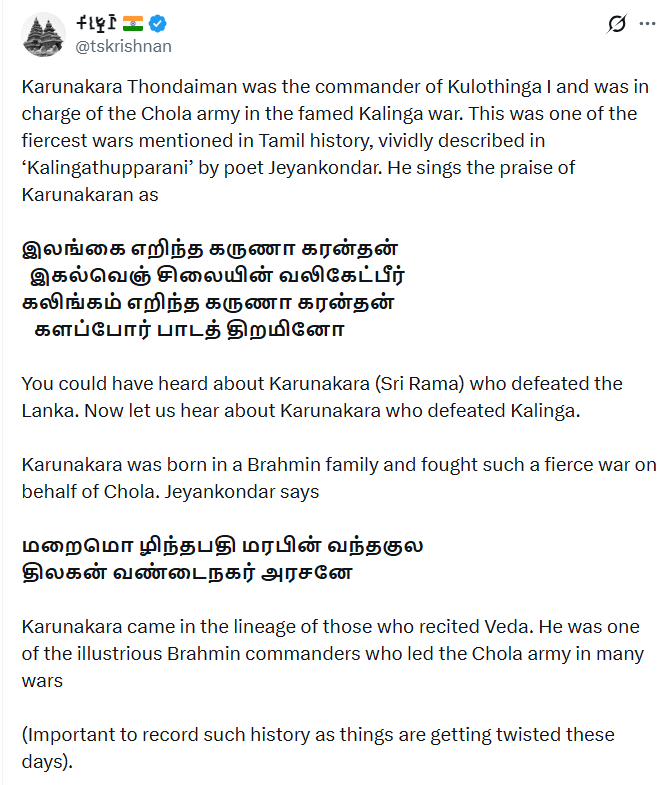
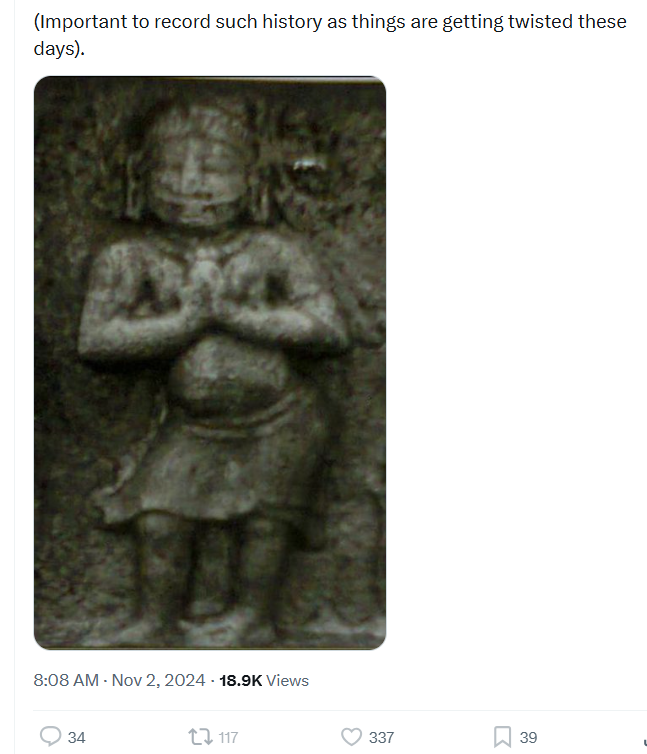
… in which thread, he makes a few random claims – but the the main one is: KT was from a Brahmin lineage.
Subsequently when this handle @dagalti asks a relevant question about TSK’s vehement assertion (not that the handle quoted any additional reference), by expanding on and annotating the verses quoted from Kaliṅkattupparaṇi, TSK stonewalls and brings in a fragment of analysis by Sri Mu Raghava Iyengar.
In the big picture of course, I am seriously convinced that these varṇa and jāti classifications are moot/academic points, all are and were Sanatana Dharmics of various extractions – avarnas & savarnas being narrow & divisive classifications – and am responding only to the uncalled-for vehemence of the claim because facts have to be part of any bharatiyata involved discourse. (and um, even otherwise!)
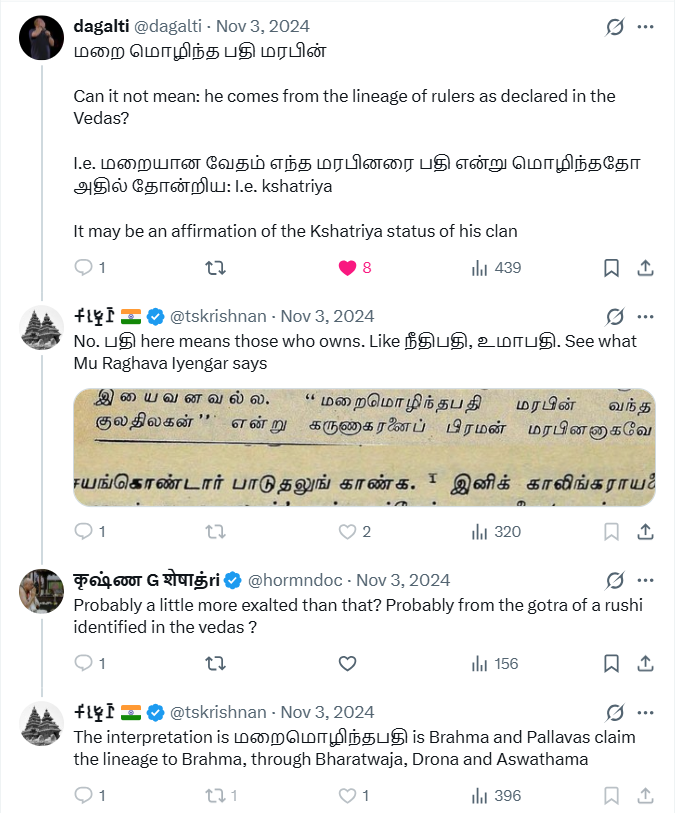
…and then goes on to invent and allude various other interpretations etc etc.
My short response to TSK’s claim:
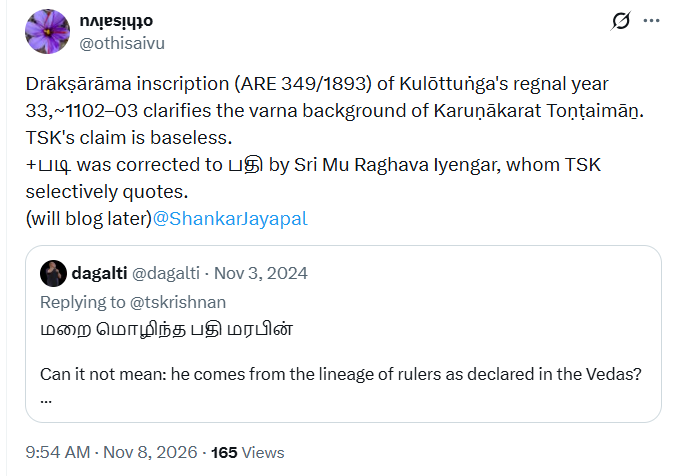
(…of course, pop-historianships are not at all bad & outlandish per se, and I do agree that TSK has the potential to be a scholarly gent, and he has been a significant anti-Dravidian polemicist & steadfast assembler-presenter of primary-source facts – and perhaps it is because of the latter reasons that he erred on this side… but whatever it is – I hold him to higher standards as explained elsewhere in this esssay….)
Now. Let us analyse the whole context in detail – with solid and verifiable evidence for clarifying & debunking the central claim of TSK.
3
The gist of the assessment in this essay: Karuṇākara Toṇṭaimāṉ was, on the balance of the surviving evidence, not of Brahmin extraction.
The strongest evidence for this is the Drākṣārāma inscription. It describes the commander identified by K. V. Subrahmanya Aiyer as Karunakara, and that commander’s father, as Śūdras. The inscription gives the commander the personal name Tiruvaraṅga and the titles [Vaṇḍu]varāja and Pallavarāja. The conclusion rests on the well-supported identification of that commander with the Karuṇākara named in the Kāñcīpuram inscription and celebrated by Jayamkondar/Jayaṅkoṇṭār.[1]
The circulating claim (not only of TSK) starts from a genuine historical fact. Karuṇākara led Kulōttuṅga I’s Kaliṅga expedition. It then turns Jayamkondar’s praise of his lineage into a statement that he came from a family of Veda reciters and was born a Brahmin. Two photographed palm leaves and the early editions examined read படி. The alternative பதி first appears in the evidence examined as Mu. Raghava Iyengar’s conjectural correction. His interpretation invokes Brahmā as an ancestor in a Pallava pedigree. That’s all.
It is to be noted that neither reading says that Karuṇākara was born a Brahmin.[2]
Scope of the rebuttal
The discussion seeks to examine TSK’s military and literary claims, the royal or Kṣatriya interpretation offered in reply to his assertions, and the subsequent ‘appeal to authority’ of TSK to Iyengar and Pallava genealogy.
It seeks to compare the actual wording of the poem/verse with what the sources say about the commander and his father. The figures reproduce source passages beside the analysis, so that there is no doubt. Copious and numbered footnotes identify the original editions, manuscript images and scholarly discussions – so that there is clarity about the sources quoted. Nothing is left to chance or ‘alternative’ interpretation or semantic fig-leaves.
Rest of the essay deals with the following sections:
- The Kaliṅga expedition and the Rāma comparison
- Grammar of the disputed lineage verse
- Early printed editions and their variant notes
- Palm leaf witnesses and remaining manuscript checks
- Iyengar’s conjecture and the circulated extract
- Later scholars and the Pallava pedigree
- The Kāñcīpuram and Drākṣārāma inscriptions
- The identification of the commander and the campaign chronology
- Other military claims and the conclusion
4
The Kaliṅga Expedition and the Rāma Comparison
Jayamkondar, also called Jayaṅkoṇḍār/Jayaṅkoṇṭār, presents Karuṇākara as the lord of Vaṇḍai and an officer of Kulōttuṅga I, the king celebrated under the title Abhaya. Karuṇākara offers to strike the seven Kaliṅgas, receives permission, leads the army and directs it in battle.
The poem also presents him as Abhaya’s principal minister. Verses 341–342, 443, 460 and 471 support his command in this expedition. [3]
The Laṅkā stanza is II.44, numbered 64 in Project Madurai. It belongs to கடை திறப்பு, the section that calls on women to open their doors. The first Karuṇākara is Rāma, whose fierce bow struck Laṅkā. The second is the commander who struck Kaliṅga. The shared name allows Jayaṅkoṇṭār to set the two victories beside each other. வலிகேட்பீர் invokes hearing of the bow’s might and திறமினோ asks the addressees to open the doors so the battle can be sung.
Of course, TSK’s claim gets the comparison right and loses those two details – not that they are central to his other claim. True, the Laṅkā action in this stanza belongs to Rāma.[4]
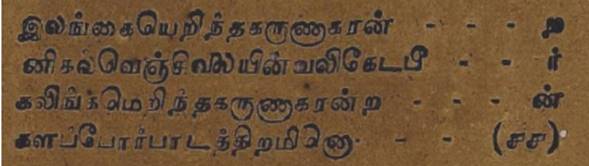
Figure 1. Subbaraya’s Puduvai edition, II.44, printed p. 15. The older print has இகல்வெஞ்சிலையின், the reading quoted in the exchange.[5]
Gopala Aiyar quotes இகல்வெஞ் சிலையின் in his 1925 reply and defends his edition’s கடைதிறமின் on metrical grounds. Iyengar’s rejoinder and Subbu Reddiar give இசைவெஞ். Iyer takes the women as listeners. Iyengar reads an invitation to sing together. They also debate the stanza’s placement. Kanakasabhai Pillai explicitly identifies the Laṅkā figure with Rāma in 1890, and Mu. Arunachalam reaches the same reading.[6]
The account of warfare is exceptionally vivid. Its courtly paraṇi form includes epic comparisons, hyperbole (naturally!) and a supernatural feast on the battlefield. Those features support a claim about how the victory was commemorated. The description gives no comparative measure by which to rank the war among the fiercest in Tamil history.[7]
The published exchanges between Aiyar and Iyengar concern the Rāma stanza and other textual problems. They add no named witness for பதி at XI.30.[8] No, not at all.
5
Grammar of the Disputed Lineage Verse
The lineage passage is XI.30, in காளிக்குக் கூளி கூறியது. It is verse 328 in Gopala Aiyar and Iyengar and 341 in several later editions. The king has just ordered an attack. The chief/commander salutes him, promises to strike the seven Kaliṅgas and is described as the ruler of Vaṇḍai and the குலதிலகன், the ornament of his lineage.[9]
The reading படி
In மறை மொழிந்தபடி, the Veda speaks. படி makes the phrase mean “as the Veda declares” or “in accordance with what the Veda says.” The same poem uses மாமுனி மொழிந்த படியே at v. 185 for what the great sage said. With மரபின் வந்த, the disputed line presents Karuṇākara as the ornament of a lineage sanctioned or described in Vedic terms.
Palanivel Pillai glosses மறை as Veda and குலதிலகன் as a person eminent in his lineage.
Kausalya Hart renders the lineage praise in terms of the śāstras.[10]

Figure 2. Kanakasabhai Pillai’s 1890 translation of XI.30 interprets the lineage as royal and sanctioned by the Vedas.[11]
The proposed reading பதி
On Iyengar’s construction, மறை is what was uttered, மொழிந்த is the relative participle and பதி is the singular lord it qualifies. He identifies that lord with Brahmā. The clause then describes a lineage descending from the Veda-uttering lord.
Contrary to what TSK claims in the subsequent, rather flippant remarks – நீதிபதி and உமாபதி illustrate meanings of pati such as lord, master or husband. They cannot determine the reading of this line.
More importantly – the poem itself uses பதி for the ruler of North Kaliṅga at XI.27, which confirms that the sense “ruler” was available.[12]
The counterproposal that the Veda declared certain people to be rulers – resembles Kanakasabhai’s royal-lineage interpretation when read with படி. With பதி, it supplies an unexpressed predicate such as பதி என்று and an object such as the people so designated.
வண்டைநகர் அரசன் expressly gives Karuṇākara a ruling title. The verse gives no explicit Kṣatriya classification. (and, this goes against the doubt expressed by @dagalti)
The original claim about a family of Veda reciters is unsupported under either construction. The poem even has Kulōttuṅga learn the four Vedas from specialists at vv. 242–243, so Vedic learning alone would be an inadequate caste test.[13]
Jayamkondar’s பல்லவர் தோன்றல் at v. 534 associates Karuṇākara with the Pallavas and makes the allusion intelligible if one adopts Iyengar’s reconstruction. The poem also gives Kulōttuṅga a pedigree that runs through Viṣṇu and Brahmā at vv. 184–187.
Such royal genealogies express dynastic legitimacy. The sources give no documentary chain from the early Pallava kings to Karunakara’s immediate family.[14] (but TSK of course, has not considered all these requirements)
6
The Early Printed Evidence
The three early settings examined, print மறைமொழிந்தபடி. They seem to preserve evidence about the reading adopted by their editors. (to be clear – I, the author of the essay have not looked at any manuscript copies physically)
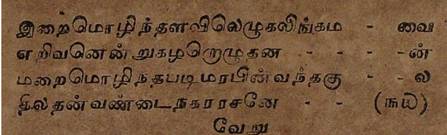
Figure 3. Subbaraya Mudaliyar, Puduvai, p. 79, XI.30. The verse reads மறைமொழிந்தபடி. The two digitized copies have the same typesetting at this verse.[15]
The Puduvai title page gives Śārvari, Aippasi, conventionally dated 1840, and says several copies were consulted. The errata correct XI.28 and XI.29 on p. 79 and give no correction to XI.30. Kanakasabhai’s 1890 article dates the first Madras printing to roughly twenty years earlier, a separate statement from the Puduvai imprint. Sastri says two people had already printed the poem. Gopala Aiyar says three preceded him. One reported pre-1898 printing remains unverified.[16]
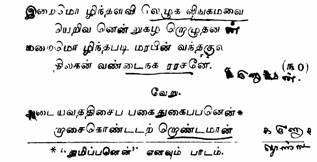
Figure 4. Sastri’s 1898 edition, p. 70. The footnote under XI.30 concerns the following stanza, with துமிப்பனென் as a variant of துகைப்பனென்.[17]
Sastri’s preface reports nine copies and says variants were placed in footnotes. The 1923 editor consulted two Madras Government Manuscripts Library copies, seven or eight copies at Thanjavur and a Madurai Tamil Sangam leaf copy, and received readings from Kanakasundaram Pillai’s copy. In 1923 the printed notes begin at stanza 329. At 328 the digitized copy has a handwritten annotation apparently reading பிரமன் and an underline beneath படி. The unidentified and undated hand belongs to the copy’s later use. The printed edition supplies no variant there. Palanivel Pillai, Subbu Reddiar and the Project Madurai text retain படி.[18]

Figure 5. Gopala Aiyar, p. 48, stanza 328. Printed படி and the handwritten marginal gloss can be distinguished directly.[19]
7
Palm Leaf Witnesses and Remaining Manuscript Checks
Two photographs of the actual palm leaves establish that படி is a manuscript reading. Both manuscripts are held by the U. V. Swaminatha Iyer Library. The comparison below concerns the letter in this stanza. The dates and textual relationship of the two copies remain uncertain, though.[20] However, it is not a significant dampener on the argumentation.

Figure 6. MS 1415, image 038, blue label 37. The stanza starts on the right of line 5. In line 6, after the first string hole, the sequence contains ழிந்தபடி. The shape of டி differs from தி in குலதிலகன் farther along the same line.[21]

Figure 7. MS 1416, image 029, blue label 28. The stanza begins at the end of image 028 and continues here, with மறைமொழிந்தபடி near the middle of the top line.[22]
The Sarasvati Mahal catalogue lists seven copies, nos. 208–213 and 563, as entries 287–293. It says the copies vary among themselves and from the prints and confirms Gopala Aiyar’s use of the collection. The catalogue gives descriptions and sample lines without transcribing XI.30.
Searches in Gyan Bharatam, the National Mission catalogue and IGNCA’s Thanjavur microfilm index did not locate a public image for these witnesses.[23]
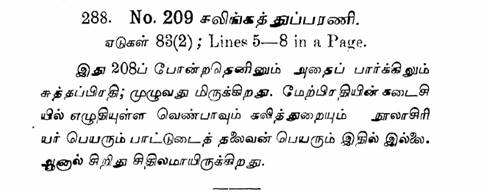
Figure 8. Sarasvati Mahal catalogue, p. 228. Entry 288 identifies MS 209 as complete and cleaner than MS 208.[24]
However, at the current level of rebuttal, I don’t think we need to scrounge around for more witnesses.
8
Iyengar’s Conjecture and the Circulated Extract
…In கருணாகரன்மரபு, §11 of his 1925 study, Mu. Raghava Iyengar quotes the poem with படி.
He regards the resulting lineage description as unsatisfactory, proposes பதி, identifies the lord as Brahmā and suggests that a scribe taking dictation confused the sounds. His positive citation is to a Pallava inscription. He names no manuscript reading பதி for this stanza.
In discussion of a different reading he identifies a Madras manuscript explicitly, illustrating the distinction between citing a witness and offering an emendation.[25]
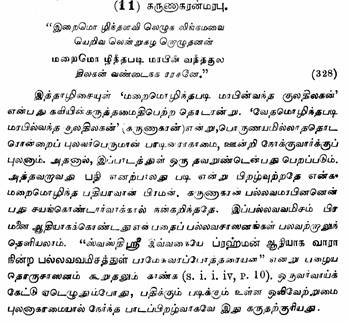
Figure 9. Iyengar’s original argument, Centamiḻ 23(5), p. 179. The quoted verse has the received படி. The prose below proposes பதி and gives the Brahmā interpretation.[26]

Figure 10. TSK circulated extract. Its typography and page break match pp. 440–441 of the 1984 facsimile of Iyengar’s 1938 collection.[27]
The passage also appeared in Centamiḻ 23(8), p. 302, where a footnote points directly to p. 179. In the collected version the corresponding note points to p. 420, the start of the renumbered §7. In context Iyengar is distinguishing Karuṇākara from Maṇavil Kāliṅgarāyaṉ, whose lineage he reads as Vēḷāḷar in separate inscriptions. The reply in the exchange accurately conveys Iyengar’s interpretation of பதி as Brahmā.
The snippet provided by TSK omits the reasoning by which he arrived at that spelling.[28]
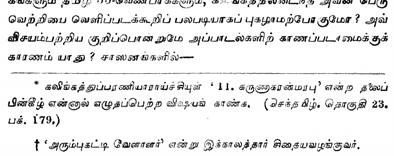
Figure 11. The same argument in Centamiḻ, p. 302, with the footnote referring back to p. 179.[29]
9
Later Scholars and the Pallava Pedigree
N. C. Kandiah Pillai in 1938 and Rā. Raghava Iyengar in 1949 also quote பதி and identify the ancestor as Brahmā. Kandiah cites Mu Raghava Iyengar. elsewhere on the same page.
Of course – Rā. is a different scholar from Mu. and argues separately for a Brahmin origin for the early Pallava clan. K. A. Nilakanta Sastri also prefers the dental பதி and reads the verse as referring to descent from Brahmā. These works establish the reception of the reading.
None identifies a manuscript that attests it.[30]
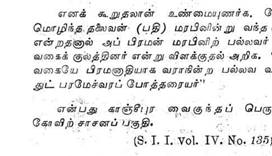
Figure 12. Rā. Raghava Iyengar, commentary p. 13. He glosses the ancestor as the lord who uttered the Veda and cites the Vaikuṇṭha Perumāḷ inscription.[31]
The genealogy behind Iyengar’s interpretation is independently attested. The inscription at the Vaikuṇṭha Perumāḷ temple in Kāñcīpuram names Brahmā at the head of the Pallava race. The Kūram grant traces a line from Brahmā through Aṅgiras, Bṛhaspati, Bharadvāja, Droṇa and Aśvatthāman to Pallava. The Kāśākuḍi plates add Śaṃyu between Bṛhaspati and Bharadvāja. Their verse 18 combines Brahmin ancestry with Kṣatriya valour in its portrayal of the eponymous Pallava.
Emmanuel Francis treats this genealogy as a royal construction that explains a transition from sages to warriors and kings.[32]

Figure 13. South Indian Inscriptions IV, no. 135(A), the Kāñcīpuram temple inscription cited by Iyengar. Section A names Brahmā in the dynasty’s pedigree.[33]

Figure 14. Hultzsch’s translation of Kāśākuḍi v. 18. The formulation attributes Brahmin ancestry and Kṣatriya valour to the eponymous Pallava.[34]
10
The Kāñcīpuram and Drākṣārāma Inscriptions
Kāñcīpuram names Karunakara
A lamp endowment in Kulōttuṅga I’s 43rd year, c. 1112–13, names Aḻakiyamaṇavāḷaṉi Maṇṭaiyāḻvār as the wife of வேளான் கருணாகரன், alias Toṇṭaimāṉ, of Vaṇḍāḻañcēri in Tirunaraiyūr-nāḍu.
The record is at the Aruḷāḷa Perumāḷ or Varadarāja temple in Kāñcīpuram. Aiyer took வேளான் as a clue to Śūdra status. The title can also denote a headman or official, so its evidentiary weight is lower than an explicit varṇa designation.[35]
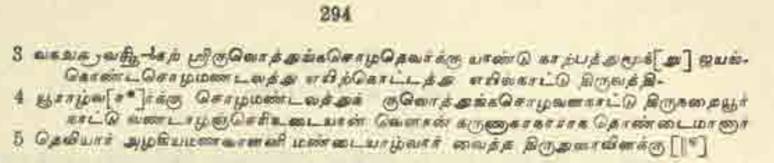
Figure 15. SII IV, no. 862, p. 294, lines 3–5. The Tamil identifies Karuṇākara by his personal name and title and records his wife’s lamp endowment.[36]
Drākṣārāma names the father and son
The Sanskrit record dated to Kulōttuṅga I’s 33rd year, c. 1102–03, calls Śīrilaṅgō sac-chūdra-puṅgavaḥ, foremost among good Śūdras. It calls his son Tiruvaraṅga, styled [Vaṇḍu]varāja and Pallavarāja, sac-chūdra-cūḍāmaṇiḥ, the crest jewel among good Śūdras. Both Śūdra terms stand outside Aiyer’s restoration brackets and occur in the earlier Telugu-script edition. The text identifies father and son as Vaiṣṇavas and credits the son with victory in Kaliṅga and a pillar on the Oḍra frontier. The earlier publication is SII IV, no. 1239, ARE 349 of 1893. Aiyer re-edited the record in Epigraphia Indica XXII, no. 23, pp. 138–145.[37]
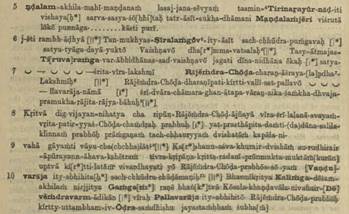
Figure 16. Epigraphia Indica XXII, p. 143. The two Śūdra epithets occur in lines 6 and 9–10 of Aiyer’s Sanskrit edition.[38]
The same record uses brāhmaṇa for ten beneficiaries of the grant. It thus distinguishes the social terms used of the beneficiaries from the epithets applied to the commander and his father.[39]
11
The Commander’s Identity and the Campaign Chronology
Aiyer identifies the two commanders through the cumulative match. The records place them in Tirunaraiyūr-nāḍu and give closely corresponding home names, Maṇḍalañjēri and Vaṇḍāḻañcēri. The Sanskrit titles correspond to the poem’s lord of Vaṇḍai and Pallava chief. Both accounts place the commander in Chola service and credit him with a Kaliṅga victory and a victory pillar. The distinct personal names and the partly restored [Vaṇḍu] title make the identification an inference.
Balasubrahmanyam, Rajaguru and Kuṭavāyil Bālacuppiramaṇiyaṉ also accept the identification. It is obvious that the explicit term Śūdra carries more weight about the commander’s family than a pedigree inferred from a disputed reading.[40]
Now. It is agreed that the identity of the commander and the identity of the expedition require separate judgments – so that there are no gaps in logic or loopholes and escape hatches.
Aiyer equated the expedition in the c. 1103 record with the poem’s campaign and dated it to c. 1076–77. He identified its Devendravarman with Rājarāja I. Nilakanta Sastri accepts the identification of the man and expressly rejects the equation of the campaigns. Sastri and Balasubrahmanyam place the poem’s campaign around 1110, against Anantavarman Chodaganga. On that dating, the c. 1103 inscription records a different campaign.[41]

Figure 17. Gopala Aiyar, p. 53, v. 362, corresponding to XI.64 and Project Madurai v. 375. The reading அனந்த பன்மன் names the king.[42]
The king’s name is itself a textual variant. Aiyer reports that Subbaraya and Suryanarayana Sastri read words corresponding to adipaṉ vīram at this point, where Gopala Aiyer prints அனந்த பன்மன். His gloss connects it to the inscriptional Anantavarman Chodaganga. In an endorsement appended to the 1923 edition, S. Krishnaswami Aiyangar calls the naming of Anantavarman a new feature and notes the wider manuscript base. Kanakasabhai’s 1890) gloss says only the ‘King of North Kaliṅga.’ Though this dating debate is somewhat inconclusive (to the extent that I could figure out), it leaves the varna terms in the inscription unaffected.[43]
12
Other Military Claims and the Conclusion
The poem securely celebrates Karunakara’s command in Kaliṅga. The Drākṣārāma record gives broader conquest praise. Oṭṭakkūttar’s Vikrama Cholan Ula, couplets 68–69, credits a Toṇṭaimāṉ celebrated in a paraṇi with victories against several rulers. Vengadaramaiah discusses those passages as evidence of further service. The Ula couplets give no personal name, dates or count of campaigns. Iyengar’s distinction between Karuṇākara and Maṇavil Kāliṅgarāyaṉ matters here, because crediting Karuṇākara with the latter’s separately attested exploits would inflate his record.[44]
But, it also important to note that the general claim that Brahmins could command Chola armies – is sound and attested.
The edition of the Karandai Tamil Sangam plates discusses a Brahmana family and identifies Krishnan Raman, titled Mummuḍi-Chola-Brahmamārāyaṉ, as a sēnāpati. The comparison shows what affirmative documentation of Brahmin background can look like. The specific evidence for Karuṇākara points in the other direction.[45]
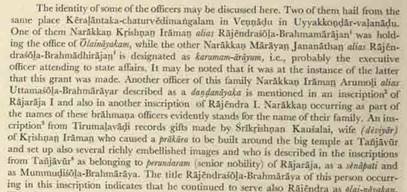
Figure 18. K. G. Krishnan’s edition of the Karandai Tamil Sangam plates, p. 28. The discussion connects the named commander Krishnan Raman with the documented Brahmana family.[46]
Conclusion
The conclusion is that Karuṇākara Toṇṭaimāṉ was not of Brahmin extraction.
This judgment rests on the identification, accepted by multiple scholars, of Karuṇākara with the Pallavarāja of Drākṣārāma. The record explicitly classifies that commander and his father as Śūdras.
The Kāñcīpuram title வேளான் supplies a separate, less decisive clue. The evidence supports a varṇa designation for the family on that identification. Of course, it does not establish a narrower jāti.[47]
The claim of Brahmin birth would still lack support if the identification were set aside.
The early prints and the two inspected leaves attest படி. Iyengar’s proposed பதி is a possible dynastic allusion to Brahmā, and the Pallava inscriptions explain why it appealed to him. Neither the Vedic formula nor the dynastic pedigree demonstrates that Karunakara’s immediate family was Brahmin.
The uncalled-for allegation by TSK that history is being twisted [in this context of Karuṇākara Toṇṭaimāṉ] adds no evidence to the claim.[48]
Footnotes, references & bibliography
[1] K. V. Subrahmanya Aiyer, Epigraphia Indica XXII, no. 23, p. 140 · Aiyer, Epigraphia Indica XXII, p. 143, lines 6 and 9–10 · South Indian Inscriptions IV, no. 862, pp. 293–294, ARE 49 of 1893
[2] Jayamkondar, Kaliṅgattupparani, Project Madurai text · U. V. Swaminatha Iyer Library MS 1415, image 038 · U. V. Swaminatha Iyer Library MS 1416, image 029 · Mu. Raghava Iyengar, Centamiḻ 23(5), 1925, p. 179
[3] Jayamkondar, Kaliṅgattupparani, Project Madurai text · N. Subbu Reddiar, Kaliṅgattupparani Ārāycci, 1957
[4] Jayamkondar, Kaliṅgattupparani, Project Madurai text · Kanakasabhai Pillai, Indian Antiquary XIX, 1890, p. 330 · N. Subbu Reddiar, Kaliṅgattupparani Ārāycci, 1957 · Kausalya Hart, Kaliṅgattupparani, English and Tamil
[6] Gopala Aiyar, Centamiḻ 23(7), p. 257 · Iyengar’s reply, Centamiḻ 23(9), scan leaf 22 · Mu. Arunachalam, Tamil literary history, pp. 29–31 · Kanakasabhai Pillai, Indian Antiquary XIX, 1890, p. 330 · N. Subbu Reddiar, Kaliṅgattupparani Ārāycci, 1957
[7] Jayamkondar, Kaliṅgattupparani, Project Madurai text
[8] Gopala Aiyar, Centamiḻ 23(7), pp. 255–259 · Mu. Raghava Iyengar, Centamiḻ 23(9), scan leaves 21–36
[9] Jayamkondar, Kaliṅgattupparani, Project Madurai text · A. Gopala Aiyar, 1923, p. 48, stanza 328
[10] Jayamkondar, Kaliṅgattupparani, Project Madurai text · P. Palanivel Pillai, commentary, p. 137 · Kausalya Hart, Kaliṅgattupparani, English and Tamil
[11] Kanakasabhai Pillai, Indian Antiquary XIX, 1890, p. 334
[12] Mu. Raghava Iyengar, Centamiḻ 23(5), 1925, p. 179 · Jayamkondar, Kaliṅgattupparani, Project Madurai text · University of Madras Tamil Lexicon, பதி
[13] Kanakasabhai Pillai, Indian Antiquary XIX, 1890, p. 334 · Jayamkondar, Kaliṅgattupparani, Project Madurai text · Mu. Raghava Iyengar, Centamiḻ 23(5), 1925, p. 179
[14] Jayamkondar, Kaliṅgattupparani, Project Madurai text · Mu. Raghava Iyengar, Centamiḻ 23(5), 1925, p. 179 · Emmanuel Francis, The Genealogy of the Pallavas, pp. 339–363
[15] Ka. Subbaraya Mudaliyar, Puduvai, p. 79 · Second scan of the same setting, p. 79
[16] Subbaraya, errata for p. 79 · Jeyamohan’s review of P. Saravanan’s edition and publication history · V. Kanakasabhai Pillai, Indian Antiquary XIX, 1890, p. 329 · Suryanarayana Sastri, preface, p. 31 · Gopala Aiyar, preface, pp. 3–5
[17] V. G. Suryanarayana Sastri, 1898, p. 70
[18] Suryanarayana Sastri, preface, p. 31 · Gopala Aiyar, preface, pp. 3–5 · A. Gopala Aiyar, 1923, p. 48, stanza 328 · P. Palanivel Pillai, commentary, p. 137 · N. Subbu Reddiar, Kaliṅgattupparani Ārāycci, 1957 · Jayamkondar, Kaliṅgattupparani, Project Madurai text
[19] A. Gopala Aiyar, 1923, p. 48, stanza 328
[20] U. V. Swaminatha Iyer Library MS 1415, image 038 · U. V. Swaminatha Iyer Library MS 1416, image 029
[21] U. V. Swaminatha Iyer Library MS 1415, image 038
[22] U. V. Swaminatha Iyer Library MS 1416, image 029 · MS 1416, preceding image 028
[23] L. Olaganatha Pillay, Sarasvati Mahal Tamil catalogue, I, pp. 225–230 · Gyan Bharatam manuscript catalogue · National Mission manuscript catalogue · IGNCA Thanjavur microfilm index
[24] Sarasvati Mahal catalogue, p. 228, entry 288
[25] Mu. Raghava Iyengar, Centamiḻ 23(5), 1925, p. 179 · Iyengar’s rejoinder on a different variant, Centamiḻ 23(9), scan leaf 29
[26] Mu. Raghava Iyengar, Centamiḻ 23(5), 1925, p. 179
[27] Ārāyccit Tokuti, 1984 facsimile of 1938 edition, pp. 440–441
[28] Mu. Raghava Iyengar, Centamiḻ 23(8), 1925, p. 302 · Ārāyccit Tokuti, pp. 420–421, §7
[29] Mu. Raghava Iyengar, Centamiḻ 23(8), 1925, p. 302
[30] N. C. Kandiah Pillai, Kaliṅkattupparaṇi Vacaṉam, 1938, p. 10 · Rā. Raghava Iyengar, Perumpāṇāṟṟuppaṭai commentary, 1949, pp. 13–14 · Rā. Raghava Iyengar, introduction, p. 10 · K. A. Nilakanta Sastri, The Cōḷas, 2nd ed., 1955, pp. 333–334 · Nilakanta Sastri, The Cōḷas, p. 341 n. 167
[31] Rā. Raghava Iyengar, Perumpāṇāṟṟuppaṭai commentary, 1949, pp. 13–14
[32] South Indian Inscriptions IV, no. 135(A), p. 10, ARE 37 of 1888 · E. Hultzsch, SII I, no. 151, Kūram grant, line 9 · E. Hultzsch, SII II, no. 73, Kāśākuḍi plates, vv. 10–18 · Emmanuel Francis, The Genealogy of the Pallavas, pp. 339–363
[33] South Indian Inscriptions IV, no. 135(A), p. 10, ARE 37 of 1888 · Archaeological Survey discussion and translation, p. 9
[34] E. Hultzsch, SII II, no. 73, Kāśākuḍi plates, vv. 10–18 · Hultzsch, printed translation, p. 365 · Emmanuel Francis, Une autre conception de la royauté, pp. 66–67
[35] South Indian Inscriptions IV, no. 862, pp. 293–294, ARE 49 of 1893 · K. V. Subrahmanya Aiyer, Epigraphia Indica XXII, no. 23, p. 140 · Ka. Ma. Vengadaramaiah, Cōḻar Kāla Araciyal Talaivarkaḷ
[36] South Indian Inscriptions IV, no. 862, pp. 293–294, ARE 49 of 1893
[37] Aiyer, Epigraphia Indica XXII, p. 143, lines 6 and 9–10 · Aiyer’s translation, pp. 144–145 · Aiyer’s translation of the campaign, p. 145 · SII IV, no. 1239, pp. 428–429 · Epigraphia Indica XXII, scanned volume
[38] Aiyer, Epigraphia Indica XXII, p. 143, lines 6 and 9–10
[39] Aiyer, Sanskrit text, p. 144, l. 12 · Aiyer’s translation, pp. 144–145
[40] K. V. Subrahmanya Aiyer, Epigraphia Indica XXII, no. 23, p. 140 · Aiyer’s translation of the campaign, p. 145 · South Indian Inscriptions IV, no. 862, pp. 293–294, ARE 49 of 1893 · S. R. Balasubrahmanyam, Later Chola Temples, p. 154 · Satyanarayana Rajaguru, Inscriptions of Orissa, Appendix IV, p. xxxvi · Kuṭavāyil Pālacuppiramaṇiyaṉ, Cōḻa maṇṭalattu varalāṟṟu nāyakarkaḷ, 1987, pp. 137–138 · Jayamkondar, Kaliṅgattupparani, Project Madurai text
[41] Aiyer, Epigraphia Indica XXII, pp. 141–142 · Nilakanta Sastri, The Cōḷas, p. 338 n. 99 · Nilakanta Sastri, The Cōḷas, pp. 321–323 · Balasubrahmanyam, Later Chola Temples, chronology of Kulottunga I · Satyanarayana Rajaguru, Inscriptions of Orissa, Appendix IV, p. xxxvi
[43] Aiyer, Epigraphia Indica XXII, p. 142 · Gopala Aiyar, p. 108, note to v. 362 · Krishnaswami Aiyangar, endorsement, 26 August 1923 · Palanivel, on Ananta Paṉmaṉ · Kanakasabhai, XI.64 in the 1890 translation, pp. 335–336
[44] Jayamkondar, Kaliṅgattupparani, Project Madurai text · Aiyer’s translation of the campaign, p. 145 · Oṭṭakkūttar, Vikrama Cholan Ula, couplets 68–69 · Ka. Ma. Vengadaramaiah, Cōḻar Kāla Araciyal Talaivarkaḷ · Mu. Raghava Iyengar, Centamiḻ 23(8), 1925, p. 302
[45] K. G. Krishnan, Karandai Tamil Sangam Plates of Rajendra-Chola I, 1984, p. 28 · Aiyer, Epigraphia Indica XXII, p. 143, lines 6 and 9–10
[46] K. G. Krishnan, Karandai Tamil Sangam Plates of Rajendra-Chola I, 1984, p. 28
[47] K. V. Subrahmanya Aiyer, Epigraphia Indica XXII, no. 23, p. 140 · Aiyer, Epigraphia Indica XXII, p. 143, lines 6 and 9–10 · South Indian Inscriptions IV, no. 862, pp. 293–294, ARE 49 of 1893 · S. R. Balasubrahmanyam, Later Chola Temples, p. 154 · Satyanarayana Rajaguru, Inscriptions of Orissa, Appendix IV, p. xxxvi
[48] U. V. Swaminatha Iyer Library MS 1415, image 038 · U. V. Swaminatha Iyer Library MS 1416, image 029 · Mu. Raghava Iyengar, Centamiḻ 23(5), 1925, p. 179 · E. Hultzsch, SII II, no. 73, Kāśākuḍi plates, vv. 10–18
– END –
** (okay, I tool 2 hours for the prep work & 9+ hours for assembling this write up *phew* – and what do you think, mY fellow 7½s? Is it worth ‘publishing’ in this format with so much effort at all etc, eh?)


