exam-taking – why & howto: notes
March 7, 2026
1
Only once in a while, I agree to work with some lad/lass or the other, in the specific context of exams/tests of some certification board or the other…
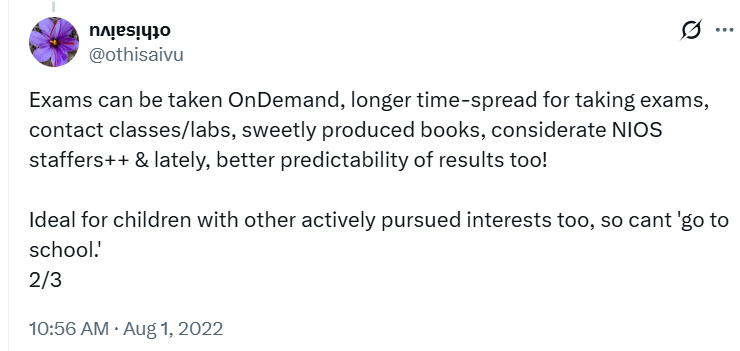
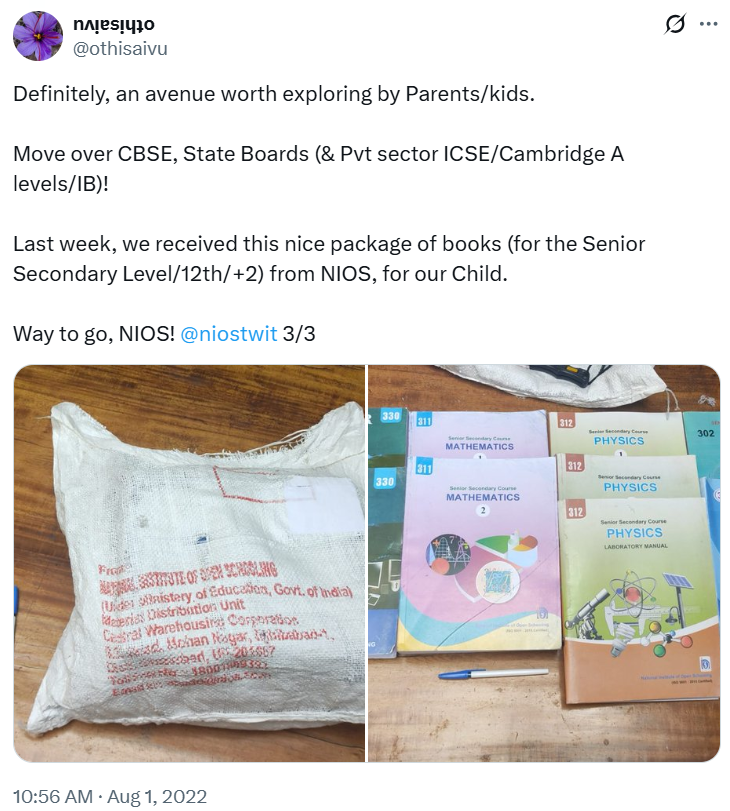
In such a context, I was recently working with a lad on Physics for his higher secondary (or +2) curriculum of NIOS board (National Institute of Open Schooling – a Central Government & a stellar entity – that I admire for n reasons) and shared with him, some notes on test taking in general and NIOS physics in parts/specific – and am sharing that stuff for whatever it is worth; of course, I also know from the earlier such iterations of the deal that, this sort of ‘handy & no-nonsense guide’ is useful to students and parents. So.

2
Okay, the following is the verbatim text of what I told (um, it was more like a discussion, though) the lad about the exams in general and as to how one ought to look at them. (a little bit of editing has happened, primarily to anonymize and the like)
NIOS exam-taking – why & howto: notes
- See, am all for gathering knowledge, wisdom and all that – including the exhilaration that comes from really ‘knowing’ something – the aha! moment. I respect intelligence very highly, and admire high IQ folks, of course. But ALL these should not prevent one from scoring good marks in exams, especially when it is an useful, ethical idea – that goes alongside the [human] evolutionary imperatives.
- More often than not, discipline & agency take one far, much far beyond one’s smartness/intelligence alone could.
- Exams are important indicators of one’s stamina, ability to communicate clearly, accurately & with precision. They also provide some input as filtering criteria for competitive places, & in various aspects of life, later.
- (Test/Exam results may get affected by the day’s weather, which should not be over or underrated – one should sufficiently scaffold/plan for the exams in terms of physical health, wellbeing & alertness; and, you must note that – but by and large the exams are useful for interpreting comparative performances & for arriving at quick/first-cut impressions – we informally do it ALL the time!)
- True, there are folks who did not take exams and outshone many others in their later lives – but one NEVER hears of the vast majority of people, who did not take exams [seriously] for some quirky, semi-literate reason or the other – and then went on to lead less-than-mediocre lives.
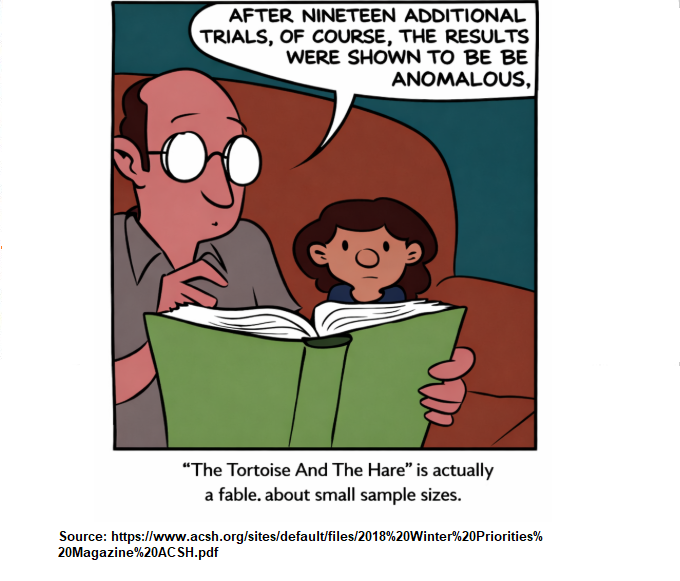
- Don’t generalize based on small sample sizes, EVER.
- Based on the ‘exam results’ and going to good schools, for any given student so far, has helped in the ways of networking, brand-recognition, associating-with-and-learning-from-peers, and may be even in virtue-signaling/preening deals. And, entry to most good schools is invariably through performance in one test or other other.
- Not that I need to tell you – but it would help to remember that YOU chose to take the exams mode – no need to tell oneself that ‘I was forced to take the exam’ etc since that would be anti-selfrespect/agency.
- Since you chose to take the exams, you should do a bloody damn-good job of them. “Anything that HAS to be done, MUST be done cheerfully” – certainly not by way of kicking and screaming and wailing and lamenting…
- …
- Anyway…
- Understanding the NIOS Exam Reality: (this is generally true for any exam/test)
- NIOS questions are directly tied to the NIOS textbook language – (but not so much as CBSE/ISC) – but it helps to communicate as per ‘marking scheme’ which is derived from the text.
- Many questions are definition, derivation- and formula-driven, not necessarily novelty-based – therefore, most are straightforward. (‘Cambridge’ A levels make a laboured pretense or a fetish of it, CBSE does okay with novelty – ISC is, well, ISC is non-novelty pro-maxx, most Stateboard syllabi are excretal – so let us not go there)
- Marking is generally steps-based, not just final-answer based.
- Examiners/Evaluators look for recognizable keywords from the syllabus. (one should be kind to them, as they are doing a boring job otherwise! The sooner AI takes this over, the better it is for everyone)
- Diagrams and formula statements often carry independent marks.
- Neatness and structure matter more than elegance.
- Sometimes Qs do appear from TMA (Tutor Mark Assignment – another way to say non-exam) chapters, not only from PE (Physical Exam) chapters – so, there is no harm in working-thru the TME chapters, and anyway they do enhance the levels of understanding of a given set of ideas.
- Generally one is given marks for ‘knowing stuff’ and not penalized for ‘not knowing stuff.’ No negative marks, that is! Fair game. But any self-respecting guy would NOT attempt to bullshit one’s way thru.
- …
- Before the Exam: Preparation approaches/tactics:
- NO need to have an anti-rote mentality – as I said umpteen times, rote-memorization is CRITICAL across subjects and behaviours. It reduces response times, processing overloads + increases confidence levels & productivity.
- Study strictly from the official NIO Physics textbook first; and then, use ‘learning guides’ secondarily for RL (Reinforcement Learning), searing fundas in to the brain and do revisions. (you should prefer your own, handwritten notes)
- Of course, nothing prevents you from immersing yourself in Feynmans of the world. The pitamahas.
- Make a formula notebook chapter-wise; rewrite multiple times. Stick up posters with the formulae and ideas that you want to internalized. Keep staring at them. Eidetic memory can help, of course.
- Memorize standard derivations exactly as in the book (sequence, a logical approach do matter).
- Practice numericals from solved examples in the textbook—many are repeated with value changes. (Don’t simply & uselessly read the solved-examples – but read the Qs attempt a decent response and then check the latter with the solution approach given…
- Learn units, symbols, and SI (International System) conventions exactly (marks are subtracted for unit errors, of course!).
- Identify chapters that are: (…and allocate time accordingly)
- high weightage (already done)
- theory-heavy
- numerical-heavy
- Practice drawing circuit diagrams, ray diagrams, graphs by hand (quickly and cleanly).
- Time yourself doing 3-hour full/mock papers at least FIVE times before the exam – review the answers, debug your approaches, so that, from mock to mock, there is a significant improvement
- Learn definitions verbatim for, say – ideas/concepts like electric field, magnetic flux, emf, capacitance, wavelength, frequency, etc etc.
- …
- Exam-Day Mental Setup – these you should actively tell yourself, so that you do not forget etc:
- Enter the exam expecting straightforward but unforgiving checking.
- Do not attempt to “impress” the examiner/evaluator – clarity beats sophistication.
- If nervous, plan to start with (lower valued ones) 2-mark questions to settle rhythm.
- Never leave a question blank/unattempted – partial marks are common. (besides the blank ones make one look negative)
- Take a bottle of water, keep it under the chair – so that you don’t accidentally topple it on the answerscript etc
- Take some very-sweet chocolate, it melts in the mouth swiftly and supplies instant sugar to the starved/scared brain.
- Wear warm clothes/jacket – you can always remove them, or use them as butt padding.
- Don’t bother about how others are behaving – just focus on the deal
- …
- Reading the Question Paper:
- Read the entire paper once before writing anything.
- Underline (at least mentally) command words such as: define, derive, explain, state, calculate etc – and respond accordingly and to the point; no rambling.
- Identify which questions are focused on, say theory vs numericals vs diagrams.
- Check internal choices carefully; pick what you know best, not what looks shorter.
- Note mark distribution and plan time: ~1.5 minutes per mark is a safe average. (80 marks – 180 minutes)
- …
- Writing Answers: General Rules:
- Good handwriting helps (of course, I have a bad handwriting, mea culpa – so am saying this from experience; honestly, somewhat passable handwriting could have really helped me in various ways… leave alone the fact that, it would have been a considerate gesture on my part, towards that hapless evaluator of my answerscript – which in turn of course would have helped me etc)
- Begin every answer on a new line; separate sub-parts clearly.
- Write point-wise answers whenever possible.
- Always write the formula first, even if calculation is trivial.
- Box or underline the final numerical answer.
- Write units explicitly at every step (V, A, T, J, m-1, etc.).
- Maintain a left margin (or some such predictable space, but consistent through-out your answerscript) for rough work or corrections.
- Striking out needs to be neat. (otherwise not only does it look awful, but also it is a waste of time – opportunity costs etc)
- …
- Physics-Specific answering approach:
- For numericals:
- Given:
- To find:
- Formula:
- Substitution:
- Final answer with unit
- (a structure such as the above, itself could potentially earn marks)
- Even if the final number is wrong, correct method gets marks.
- Draw labeled diagrams wherever remotely relevant – they also help you focus on relevant things.
- For derivations:
- Start with physical situation
- Write assumptions
- Proceed stepwise
- End with final result clearly boxed
- For laws/principles:
- Statement
- Mathematical form
- Explanation of symbols
- Units (if applicable)
- …
- For numericals:
- Handling Diagrams and Graphs:
- Use a pencil and ruler for diagrams.
- Label everything – including axes in graphs with:
- Idea/concept
- Quantity
- Symbol
- Unit
- Mark important points (origin, intercepts, maxima).
- Even rough but correctly labeled diagrams score marks.
- …
- Managing Time during the Exam:
- Do not spend more than:
- 4 – 5 minutes on a 2-mark question
- 10 – 12 minutes on a 5-mark question
- If stuck, leave space and move on. (remember to get back to this when you are done with the rest)
- Reserve 10 – 15 minutes at the end for revision.
- Use the last minutes to:
- check units
- check sign errors
- complete unfinished derivations/numericals
- …
- Do not spend more than:
- Common Mistakes to Avoid:
- Writing long paragraphs when a definition was asked.
- Skipping steps in derivations.
- Writing answers without units.
- Mixing-up CGS and SI units.
- Using/expanding prefixes – milli micro kilo etc – and forgetting to use their numerical value.
- Overwriting or cutting excessively.
- Using symbols inconsistently within the Q scope (e.g., using V for velocity).
- Assuming the examiner/evaluator will ‘understand what you mean’ etc
- Ignoring internal choices without reading both options.
- …
- You ought to be Smart, so:
- Attempt all questions, even weak ones.
- For theory questions, you partially know:
- write the correct definition
- add a diagram
- state one application
- (the above would often cross a passable threshold)
- Reproduce textbook phrasing when unsure.
- If short of time, prioritize completing all questions over perfecting few.
- …
- Final ‘Psych’ related pointers:
- NIOS exams reward discipline, not necessarily brilliance – same is the case with CBSE. (not that this is bad; the fact is that there are no pretensions as in A levels (of Cambridge types) or the plain jack-assed nature of ISC types; the less is said about the stateboards, the better it is!)
- Accuracy beats creativity.
- Calm writing scores more than rushed brilliance.
- The examiner wants reasons to give marks – therefore make the reasons visible obvious.
- Have pity on the poor evaluator-examiner – help him along to evaluate you, don’t tire him out or make him/her exasperated with your response; nonsense is eminently avoidable, ALWAYS…
- Write what the book expects, show every step, draw whenever possible, and never hide your working.
- …
Having said all that, best wishes & may you get what you truly deserve – depending on your perseverance, discipline, presentation and knowledge.
END


 othisaivu.in